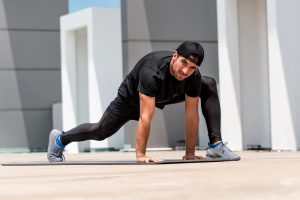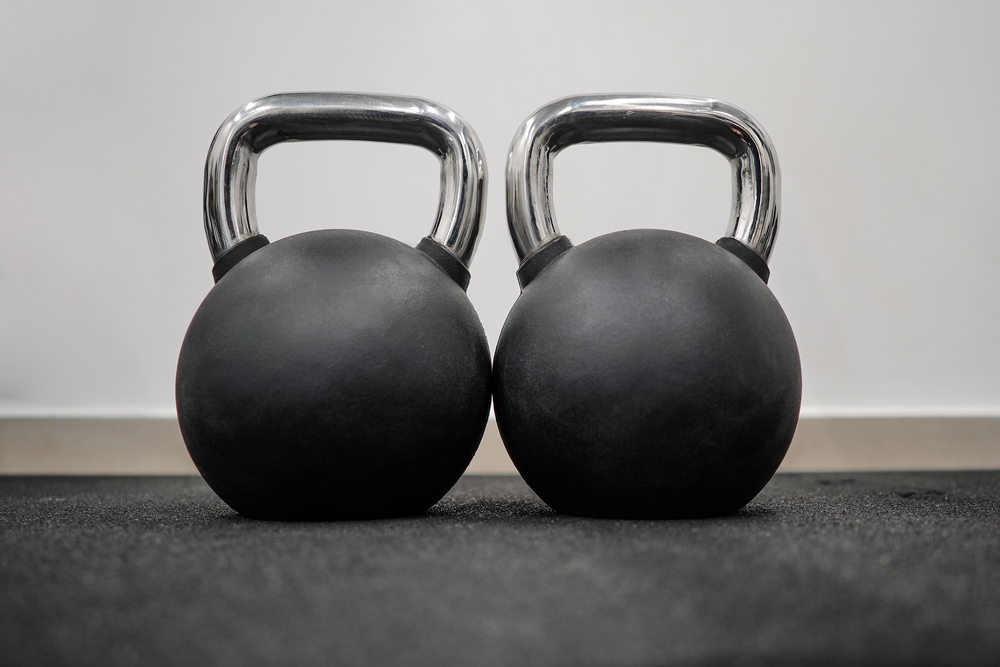
A gorilla row dropset combines alternating single-arm rows from a deep hip-hinge position with strategic weight reductions to push your back muscles past normal failure points, creating more time under tension and metabolic stress than standard rowing variations.
The Gorilla Row Mayhem protocol specifically delivers 18 total reps across three progressively easier phases, allowing you to accumulate massive training volume even with limited equipment.
Keep reading to learn the exact technique, programming strategies, and common mistakes that could sabotage your results.
What Makes Gorilla Rows Different from Standard Rows
Most rowing exercises have you pull weight while standing in a bent-over position.
Gorilla rows flip this approach. You set your kettlebells or dumbbells directly on the floor and drop into a deep hip-hinge position—think sumo stance with your torso nearly parallel to the ground.
Your hands grip both weights simultaneously, but here's where things get interesting.
You row one weight toward your torso while actively pressing the other into the floor.
This alternating pattern continues throughout the set, creating a unique challenge that standard rows simply can't replicate.
Each arm works independently, which means you can't compensate for a weaker side the way you might during barbell rows.
If your left lat is lagging behind your right, you'll know it immediately.
The hip-hinge position stays locked throughout the entire set.
You're not standing up between reps or adjusting your torso angle—you hold that deep hinge from start to finish.
This creates extended time under tension that hammers your entire posterior chain.
Your glutes and hamstrings fire isometrically just to keep you from falling forward, while your core works overtime to prevent rotation.
Your obliques and deep stabilizers face constant tension as they resist the urge to twist when you pull one weight up.
Traditional bent-over rows don't demand this level of anti-rotation work.
You're essentially performing a loaded carry and a heavy row simultaneously.
The muscle recruitment profile extends far beyond what typical rows deliver:
- Latissimus dorsi handles the primary pulling motion
- Rhomboids and trapezius (upper, middle, and lower regions) drive scapular retraction
- Rear deltoids assist with shoulder extension
- Erector spinae maintains spinal stability under load
- Grip strength and forearm development improve from the prolonged hold
This combination of unilateral training, anti-rotation core work, and isometric posterior chain loading creates a stimulus your back muscles rarely experience.
Standard bent-over rows let you use momentum and allow slight form variations as you fatigue.
Gorilla rows eliminate those escape routes—you either maintain perfect position or the set ends.
The Gorilla Row Mayhem Dropset Protocol: Three Phases Explained
The Gorilla Row Mayhem protocol delivers 18 total rowing repetitions through three distinct phases, each progressively easier than the last.
This design solves a common problem: when you're training at home or in a hotel gym with limited weight options, how do you push your back to true muscular failure?
The answer lies in manipulating your body position rather than just reducing load.
Each phase changes your leverage and range of motion, allowing you to continue working past the point where a standard set would end.
You accumulate massive training volume even when you can't strip weight from the bar.
Phase One: Bent-Over Rows (6 reps)
Start standing upright with your kettlebells or dumbbells hanging at your hips.
Pull your shoulder blades together before you even begin the hinge.
Push your hips backward and lean forward until your torso hits roughly a 45-degree angle—your core should feel tight and your eyes should look down at the ground, not forward.
Perform six bilateral bent-over rows from this position. Both arms pull simultaneously, driving your elbows back toward your hips.
This phase hammers your mid-back muscles while forcing your lower back and abdominals to stabilize aggressively.
You're working against gravity at a severe disadvantage here, which makes this the hardest phase of the sequence.
Phase Two: Strict Gorilla Rows (12 reps total)
Lower the weights to the floor and widen your stance slightly.
Drop deeper into the hip-hinge position—your hips should sit lower than your shoulders now.
Lock your core and glutes into maximum tension and hold that position throughout.
Row the right weight upward while pressing the left weight firmly into the ground.
Your shoulders must stay level with the floor. Complete six reps on each side for twelve total repetitions.
The key word here is “strict”—you cannot allow any torso rotation.
Your shoulder blades stay square to the ground, which creates maximal mid-back engagement but reduces the range of motion compared to rotational variations.
This phase feels easier than Phase One because you've improved your leverage.
The deeper hip position and alternating pattern both reduce the difficulty just enough to let you continue training past where you failed during bent-over rows.
Phase Three: Rotational Gorilla Rows (12 reps total)
Stay in the same deep hip-hinge position you used for Phase Two.
Now perform six more rows per side, but this time let your torso rotate as much as possible.
Your hips stay completely square—all rotation must originate from your thoracic spine.
This variation allows the greatest range of motion.
As you row, your upper back twists to follow the movement, which intensely challenges your rhomboids and increases lat activation through a deeper stretch.
The rotation makes the movement mechanically easier than strict rows, giving you just enough advantage to squeeze out another twelve reps when your back is already screaming.
Why This Works
Each transition makes the exercise progressively more manageable through position changes and increased mobility allowances.
Phase One uses the worst leverage.
Phase Two improves leverage but restricts movement.
Phase Three maintains good leverage while allowing rotation to extend your range and reduce difficulty.
You're not simply dropping weight—you're strategically modifying the exercise itself to match your declining strength levels.
Complete three to four sets of this entire sequence.
The volume accumulation is substantial: each full set delivers 30 total repetitions (6 + 12 + 12) with meaningful load, far more than you'd achieve with standard straight sets when weight options are limited.
Perfect Your Gorilla Row Technique for Maximum Results
Poor form on gorilla rows doesn't just reduce muscle activation—it shifts the load onto your lower back and turns a back-building exercise into an injury risk.
Here's how to nail the movement from setup to finish.
Setting Up for Success
Place two equally weighted kettlebells on the floor.
Step into a sumo-style stance with your feet wider than hip-width and the weights positioned between your feet.
Push your butt backward to initiate the hip hinge, allow a slight knee bend, and descend until you can comfortably grip both handles.
Your torso should end up nearly parallel to the floor with a completely flat back—no rounding at the shoulders, no excessive arch in the lumbar spine.
Kettlebells work better than dumbbells here because their elevated handles keep you from rounding your back excessively when gripping weights on the floor.
If you only have dumbbells available, elevate them on weight plates, boxes, or mats to roughly mid-shin height.
This elevation maintains proper spinal alignment during the hinge position.
Executing the Movement
Grip both handles with a neutral palm position—thumbs pointing forward.
Before you pull anything, brace your core intensely and engage your glutes hard.
This pre-tension prevents your hips from rising as you fatigue, which is one of the most common technical breakdowns.
Think “elbow back and down” rather than “hand up toward ear.”
This mental cue keeps the movement in the proper plane.
You're driving your elbow backward toward your hip, not lifting the weight up toward your shoulder.
The distinction matters because rowing toward your ear turns this into an arm exercise.
Focus on scapular retraction first, weight movement second.
Pull your shoulder blade down and back before your elbow even starts bending.
This ensures your back muscles initiate the movement rather than your biceps taking over.
At the top position, pause for one to two seconds while actively pressing your opposite hand into the grounded kettlebell.
This press creates stability and keeps your torso from rotating.
Lower the weight under complete control over two full seconds—don't just drop it.
Immediately repeat on the opposite side without resetting your position.
Non-Negotiable Form Standards
Your back must stay perfectly flat throughout every repetition.
The moment you feel your spine rounding or excessively arching, the set is over.
That hip-hinge position you established at the start? It doesn't change.
Your hips cannot rise as you get tired, even though every muscle in your body will want to cheat by standing up slightly.
Keep your shoulders level to the ground throughout the rowing motion.
When one shoulder lifts significantly higher than the other, you've lost the anti-rotation component that makes this exercise valuable.
The weight should travel to your belly button area with your elbow tucked close to your torso, not flared out wide.
Eliminate all momentum and jerking motions. Each rep should look deliberate and controlled.
If you need to use your whole body to heave the weight up, you've chosen a load that's too heavy for your current strength level.
Reduce the weight and perform the movement correctly rather than grinding through sloppy reps that accomplish nothing.
How to Program Gorilla Row Dropsets into Your Training
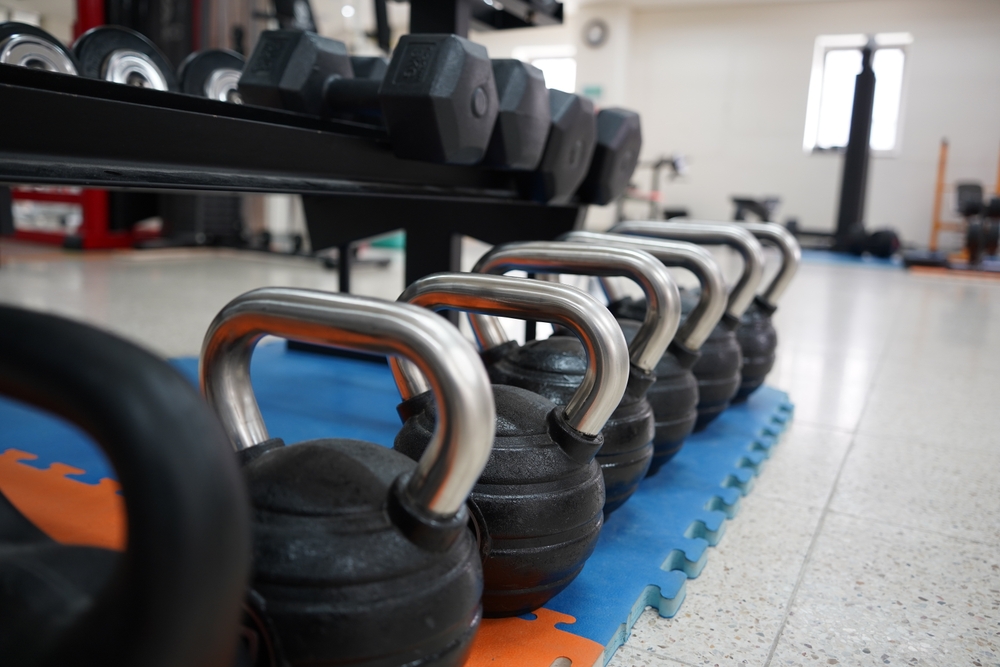
Dropsets work through a simple but brutal mechanism: you take a muscle to failure with a given load, immediately reduce the weight, and continue to failure again without rest.
This forces your body to recruit larger fast-twitch muscle fibers as the smaller fibers fatigue, creating extended time under tension and significant metabolic stress.
The cellular swelling and metabolic byproduct accumulation trigger powerful hypertrophic signals.
You're essentially cramming high training volume into compressed timeframes.
The execution details matter. Reduce weight by 20-30% between drops.
If you start your gorilla rows with 25-pound kettlebells, drop to 18-20 pounds, then finish with 12-15 pounds.
Arrange all your weights within arm's reach before starting.
Your transition time must stay under 5-10 seconds maximum—any longer and you've given your muscles too much recovery, diminishing the intensity benefit that makes dropsets effective.
Finding Your Training Frequency
Train your back two to three times per week with at least 48 hours between sessions.
Your muscles need time to recover and adapt, especially after the metabolic stress that dropsets create.
For total weekly volume, intermediate lifters should accumulate 12-18 working sets for back muscles. Advanced lifters can handle 18-25 weekly sets.
The Gorilla Row Mayhem protocol counts as one intensive set despite its multi-phase structure, so factor that into your weekly total accordingly.
Strategic Placement Options
You have two smart ways to integrate gorilla row dropsets into your workouts.
Option one places them at the beginning as a pre-fatigue tool.
You activate and wake up your entire back before moving into heavier compound movements like barbell rows or weighted pull-ups.
The lighter loads won't compromise your strength for subsequent exercises, but the high-rep stimulus primes your back muscles for maximum recruitment.
Option two uses them as a finisher after your main strength work.
You've already hammered your back with heavy loads, and now you thoroughly exhaust the target muscles with lighter weights pushed to absolute failure.
This approach capitalizes on the fatigue you've already accumulated.
Regardless of placement, reserve dropsets for the last one to two sets of a given exercise.
Using them earlier prevents excessive fatigue from compromising your subsequent work quality.
Research confirms that dropsets produce similar hypertrophy to traditional training but accomplish it in half to one-third the time—they're efficient, but they're also taxing.
Structuring Your Rep Ranges
Muscle growth occurs across a broad spectrum of rep ranges when you push sets close to failure.
Structure your workout to take advantage of this:
- Early workout (5-10 reps): Heavy compound barbell movements like bent-over rows and deadlift variations
- Mid-workout (10-20 reps): Moderate-load dumbbell and machine exercises such as chest-supported rows
- Late workout (15-30 reps): Lighter dropset techniques and high-rep gorilla rows
This progression maximizes mechanical tension early when you're fresh, then shifts toward metabolic stress as fatigue accumulates.
Selecting the Right Weights
Beginners should start with 10-15 pound kettlebells and prioritize mastering the movement pattern before adding load.
Rushing into heavier weights with poor technique wastes time and increases injury risk.
Intermediate lifters typically work with 20-35 pound kettlebells for standard gorilla rows.
Advanced lifters may handle 40-60+ pound kettlebells depending on their strength levels.
Progressive overload drives continued adaptation.
Select a weight you can control for eight to twelve repetitions per side with excellent form.
When you can complete the top end of your rep range for all sets with good technique, increase the weight by the smallest available increment—usually five pounds per kettlebell.
For the Gorilla Row Mayhem dropset specifically, choose a weight that feels challenging for the bent-over row phase.
The subsequent gorilla row phases will naturally feel more manageable due to the improved leverage and positioning changes.
Don't select a weight based on what feels comfortable for rotational rows—if Phase One doesn't push you hard, you've chosen too light.
Avoid These Critical Gorilla Row Mistakes
Most people fail at gorilla rows long before their back muscles actually give out.
Form breakdowns kill the exercise's effectiveness and shift tension away from the target muscles.
Here are the technical errors that sabotage your results.
Turning Rows into Bicep Curls
The most common mistake is initiating the movement with elbow flexion rather than driving with your back.
You're essentially performing a bicep curl from a bent-over position, which defeats the entire purpose of the exercise.
Your biceps fatigue quickly while your back muscles coast along with minimal stimulation.
The fix requires a mental shift. Think “elbow back and down” instead of “hand up.”
Initiate each repetition by retracting your shoulder blade first, before your elbow even begins to bend.
Visualize pulling your elbow toward your back pocket rather than lifting the weight.
This single cue redirects the tension from your arms to your lats and rhomboids where it belongs.
Letting Your Hips Rise
As fatigue accumulates, your body searches desperately for mechanical advantages.
The easiest cheat is letting your hips rise out of the deep hinge position.
This reduces time under tension for your back and shifts stress onto your lower back instead.
You're making the exercise easier at exactly the moment when it should be getting harder.
Combat this by aggressively contracting your hamstrings and glutes throughout the entire set.
Never relax this tension, not even for a single second between reps.
Your posterior chain must stay locked into position.
If you feel your hips starting to climb, the set is over—continuing with compromised form wastes your effort.
Loading Too Heavy, Too Fast
Using weight beyond your control capacity destroys form and dramatically increases injury risk.
Worse, compromised technique means reduced muscle activation.
You're grinding through difficult sets that accomplish nothing productive.
Your ego gets stroked while your back muscles wonder when the real workout starts.
The standard is simple: if you cannot maintain a perfectly flat back and controlled tempo for the entire working set, the load is too heavy.
Reduce the weight.
Master the movement pattern with lighter loads before progressing.
Your back muscles don't know what the number on the kettlebell says—they only respond to tension and time under load.
Dropping the Weight on the Descent
Letting the weight fall rapidly eliminates the eccentric phase, which is where significant muscle damage and growth occur.
You're giving up half the benefit of each repetition.
The negative portion of a lift creates substantial hypertrophy stimulus, possibly even more than the concentric phase.
Control the descent for at least two seconds per repetition.
This deliberate lowering tempo maximizes muscle fiber recruitment and time under tension.
Your muscles should fight gravity on the way down just as hard as they work against it on the way up.
Pushing Dropsets Too Hard, Too Often
Dropsets create intense fatigue in both your target muscles and your central nervous system.
The metabolic stress and accumulated volume take a serious toll.
Using dropsets too frequently leads to overtraining, stagnation, and potential regression rather than growth.
Implement dropset training in four to eight week blocks, then return to standard training for at least four to eight weeks before reintroducing them.
This cyclical approach gives your body time to recover and adapt while preventing the diminishing returns that come from overusing any single training technique.
Building a Complete Back Training Program with Gorilla Row Dropsets
Gorilla row dropsets work best when surrounded by complementary movements that attack your back from different angles.
Your back development depends on three distinct movement patterns working together.
Heavy vertical pulling movements like weighted pull-ups and lat pulldowns develop width through direct lat emphasis.
These exercises stretch your lats through a full range of motion and create the V-taper look most people chase.
Horizontal pulling variations including barbell bent-over rows, chest-supported rows, and cable rows build thickness through targeted rhomboid and mid-trap development.
These movements add density to your upper back.
Deadlift variations such as conventional deadlifts, Romanian deadlifts, and rack pulls strengthen your entire posterior chain with heavy emphasis on the erector spinae and lower back muscles.
A Complete Back Workout
Here's how these pieces fit together:
- Weighted pull-ups: 3 sets of 6-8 reps for strength development
- Barbell bent-over rows: 4 sets of 8-10 reps for mass building
- Chest-supported dumbbell rows: 3 sets of 10-12 reps to isolate your back without taxing your lower back
- Gorilla Row Mayhem dropset: 3-4 sets for complete back exhaustion
This structure progresses from heavy compound movements when you're fresh to lighter, higher-rep work as fatigue accumulates.
The gorilla row dropset finishes the job, pushing your back muscles past normal failure points.
Recovery Drives Growth
Muscle growth happens during recovery, not training.
Consume 1.6-2.2 grams of protein per kilogram of bodyweight daily to support muscle protein synthesis.
Sleep seven to nine hours nightly for optimal hormonal recovery and adaptation.
Incorporate active recovery through light mobility work, stretching, and activities that promote blood flow without creating additional fatigue.
Monitor your performance weekly.
Progressive overload remains the driver of continued adaptation—attempt to add reps, increase load, or improve movement quality each session.
When progress stalls for two consecutive sessions, modify your approach by changing exercises, adjusting rep ranges, or manipulating volume and intensity.
Dropsets produce similar hypertrophy to traditional training in half to one-third the time, but they shouldn't comprise your entire training approach.
Use them strategically within structured training blocks.
Prioritize technical excellence over ego lifting.
Your back muscles respond to tension and time under load, not the numbers written on your equipment.
Conclusion
The gorilla row dropset combines unilateral training, anti-rotation core work, and strategic fatigue management into one highly efficient exercise.
Master the technique first with lighter loads, then integrate the protocol intelligently within a complete back training program that includes vertical pulling, horizontal rowing, and deadlift variations.
Execute it correctly with adequate recovery, and you'll build a thicker, wider back without needing hours in the gym or access to endless equipment.