The best kettlebell abs workout combines the Turkish Get-Up, Kettlebell Swing, and Windmill as your foundation, then builds around them with moves like the Renegade Row, Suitcase Carry, and Plank Kettlebell Drag to hit every angle of your core.
Keep reading for the exact exercises, programming, and technique details you need to make it work.
Why Kettlebells Build Abs Better Than Traditional Core Exercises
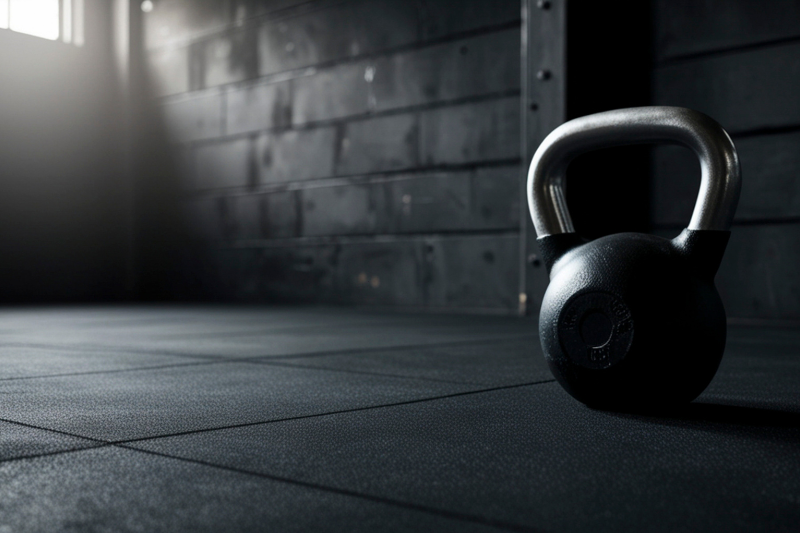
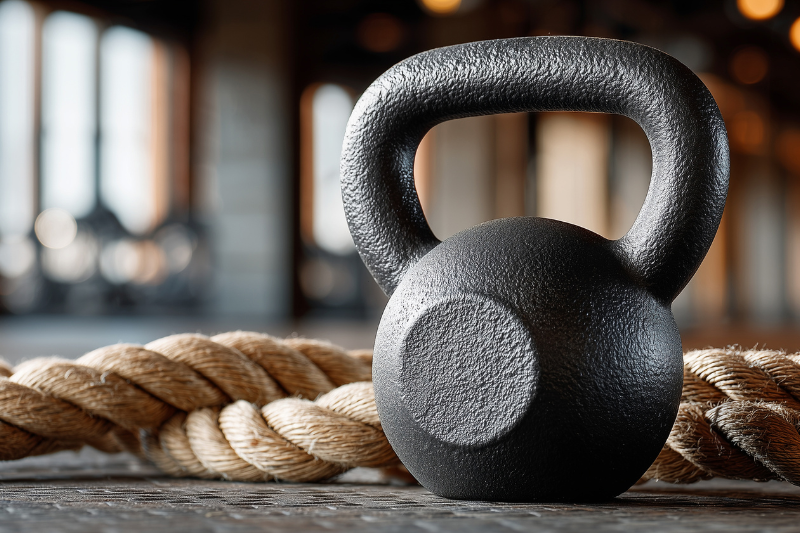
The kettlebell's handle sits 6–8 inches above its center of gravity — the opposite of every other free weight. That offset means every exercise you do with it, even something as simple as a carry, forces your core to constantly fight against an unstable, shifting load. A dumbbell or barbell sits balanced in your hand. A kettlebell pulls away from it, and your abs have to answer.
That's a fundamentally different training stimulus from crunches or sit-ups, which work the core in isolation through a single plane of motion. Spine researcher Dr. Stuart McGill calls what kettlebells develop “core stiffness” — the ability to brace and stabilize under dynamic, real-world loads rather than just contract and release on a mat.
To train the core properly, you need to cover five mechanical demands:
- Anti-extension — resisting spinal arching (swings, dead bugs)
- Anti-rotation — resisting twisting forces (renegade rows, suitcase carries)
- Anti-lateral flexion — resisting side-bending (windmills, suitcase carries)
- Rotational power — generating and controlling rotation (half-kneeling chops)
- Integrated stability — handling all of the above at once (Turkish Get-Up)
Most traditional core programs camp out in one or two of these categories. Kettlebell training hits all five, often within a single exercise, which is why an ACE-sponsored study found just 8 weeks of kettlebell training increased core strength by 70% — a result that typical core training programs simply don't come close to matching.
The Best Kettlebell Exercises for Abs (Ranked)
1. Turkish Get-Up
The Turkish Get-Up is the most complete core exercise a kettlebell makes possible. This 7-stage movement — from lying flat to standing upright — holds a single weight overhead the entire time, forcing your core to resist extension, rotation, lateral flexion, and flexion simultaneously. McGill describes it as teaching the body to “lock the ribcage onto the pelvis,” which is the foundation of genuine core strength. The obliques and transverse abdominis do the heaviest work, but nothing stays passive. Give each rep 30–60 seconds. Rushing it eliminates the benefit entirely.
2. Kettlebell Swing
The swing is primarily an anti-extension exercise. At the top of every rep, your abs fire hard to stop the bell's momentum from yanking your spine into hyperextension — research measured glute activation at 76% MVC and documented abdominal muscles pulsing ballistically with each rep, training the core to rapidly generate and release stiffness. Two variations worth knowing:
- Single-arm swing produces 14–25% greater contralateral erector spinae activation than the two-hand version, adding a strong anti-rotation demand
- Adding a brief tension pulse (“kime”) at the top increases external oblique activation by 101–140%
3. Kettlebell Windmill
Most training programs never touch the frontal and transverse planes. The windmill lives there. Your obliques, quadratus lumborum, and transverse abdominis form a lateral chain that must resist spinal flexion, extension, and side-bending all at once — under an asymmetric overhead load. Think of it as a side plank, single-leg deadlift, and overhead hold fused into one movement.
4. Renegade Row
The plank position handles anti-extension. The moment one arm rows, your entire opposite-side core fires to prevent your hips from rotating — that's anti-rotation layered on top. Narrowing your foot stance increases the rotational demand significantly. Few exercises combine both categories this cleanly.
5. Suitcase Carry
Walking with a kettlebell in one hand sounds simple. A 2024 study in the International Journal of Exercise Science found it outperformed both the bilateral farmer's carry and the standard plank for activating the spinal stabilizers — specifically the longissimus and multifidus. The contralateral obliques and quadratus lumborum fire continuously to prevent side-bending, and the walking component adds dynamic instability that no static hold can replicate.
Supporting Exercises
These round out a complete program by filling gaps the top five leave:
- Plank KB Drag — shifting anti-rotation challenge; the further the bell, the harder it gets
- Half-Kneeling Chop — trains rotational power with lower-body compensation removed
- Kettlebell Dead Bug — anti-extension under load; legs lower, lever arm lengthens, demand increases
- Kettlebell Halo — shifting load vector challenges obliques and TA; works as a warm-up or standalone
- Around the World — dynamic anti-rotation; hips must stay locked forward or the benefit disappears
Exact Programming — Sets, Reps, Weight, and Rest by Level
Weight Selection
Kettlebell training splits into two movement types — ballistic (swings, cleans) and grinds (TGU, windmill, press) — and your weight selection should differ between them. Grinds demand more control and stability, so you'll always use a lighter bell there than on ballistic work.
| Level | Women — Ballistic | Women — Grinds | Men — Ballistic | Men — Grinds |
|---|---|---|---|---|
| Beginner | 8–12 kg | 4–6 kg | 12–16 kg | 8–12 kg |
| Intermediate | 12–16 kg | 8 kg | 16–24 kg | 12–16 kg |
| Advanced | 16–20 kg | 12–16 kg | 24–32 kg | 20–24 kg |
Start at the bottom of your range. About 40% of beginners go too heavy too soon, which compromises form before the movement pattern is established.
Rep Ranges by Exercise and Level
| Exercise | Beginner | Intermediate | Advanced |
|---|---|---|---|
| Turkish Get-Up | 1–3/side × 2 sets | 3–5/side × 3 sets | 1/side × 5 sets (heavy) |
| Swing | 10–15 × 2 sets | 15–20 × 3 sets | 20–25 × 3–5 sets |
| Windmill | 3–5/side × 2 sets | 5–8/side × 3 sets | 5/side × 3–4 sets (heavy) |
| Renegade Row | 5–8/side × 2 sets | 8–10/side × 3 sets | 10/side × 3–4 sets |
| Suitcase Carry | 20–30 yds/side × 1–2 sets | 30–40 yds/side × 2–3 sets | 50 yds/side × 2–3 sets |
| Plank KB Drag | 8/side × 2 sets | 10/side × 3 sets | 30–60 sec × 2–3 sets |
| Half-Kneeling Chop | 8–10/side × 2 sets | 10–12/side × 3 sets | 12–15/side × 3 sets |
| Dead Bug | 10 total × 2 sets | 10/leg × 3 sets | 10/leg × 3 sets (heavier bell) |
| Halo | 10 each direction × 2 sets | 10 each direction × 3 sets | 15–20 each direction × 3 sets |
Rest Periods
- Beginner: 60–90 seconds between sets; 90 seconds between exercises
- Intermediate: 45–60 seconds between sets; 60 seconds between circuits
- Advanced: 30–45 seconds between sets; minimal rest in circuit or AMRAP formats
Progression Rules
When current weights feel manageable and you can complete every prescribed rep with clean form, it's time to move forward. Always follow this sequence — skipping steps is where injuries begin:
- Master form
- Add reps
- Reduce rest periods
- Increase weight
Add weight in 4 kg increments only. A proven approach is to alternate between adding weight and reducing rest every two weeks, which keeps adaptation moving without overloading any single variable at once.
Full Kettlebell Abs Workouts for Every Level
Train 2–3 times per week with at least one rest day between sessions. Total session time runs 20–35 minutes depending on your level.
Warm-Up (All Levels — 5 Minutes)
| Order | Exercise | Duration/Reps |
|---|---|---|
| 1 | Jumping jacks or high knees | 60 seconds |
| 2 | Kettlebell Halo (light bell) | 10 reps each direction |
| 3 | Bodyweight squats | 10 reps |
| 4 | Single-arm farmer carry (light bell) | 20 seconds per side |
| 5 | Arm circles and gentle torso twists | 30 seconds |
Beginner Workout (15 Minutes)
Complete 2 full rounds in sequence. Rest 60 seconds between exercises, 90 seconds before starting the next round.
| Order | Exercise | Reps |
|---|---|---|
| 1 | Kettlebell Dead Bug | 10 total (5/leg) |
| 2 | KB Around the World | 10 each direction |
| 3 | Plank KB Drag | 8 each side |
| 4 | Suitcase Carry | 20 yards each side |
| 5 | Two-Hand Swing | 10 reps |
Intermediate Workout (25 Minutes)
Two circuits, 3 rounds each. Rest 60 seconds between rounds, 90 seconds between circuits.
Circuit A
| Order | Exercise | Reps |
|---|---|---|
| 1 | Single-Arm Swing | 10 each side |
| 2 | Plank KB Drag | 10 each side |
| 3 | Half-Kneeling Chop | 8 each side |
Circuit B
| Order | Exercise | Reps |
|---|---|---|
| 1 | KB Dead Bug | 10 each leg |
| 2 | Half-Kneeling Windmill | 5 each side |
| 3 | Suitcase Carry | 30 yards each side |
Advanced Workout (30 Minutes)
Straight-set format. The exercises are sequenced deliberately — the TGU first while the nervous system is fresh, carries and drags last when fatigue is highest and the anti-rotation demand becomes a conditioning element.
| Order | Exercise | Sets × Reps | Rest |
|---|---|---|---|
| 1 | Turkish Get-Up (heavy) | 5 × 1 each side | 45 sec between sides |
| 2 | Single-Arm Swing | 4 × 15 each side | 45 sec |
| 3 | Windmill (standing, loaded) | 3 × 5 each side | 45 sec |
| 4 | Renegade Row | 3 × 10 each side | 45 sec |
| 5 | Suitcase Carry (heavy) | 2 × 50 yards each side | 30 sec |
| 6 | Plank KB Drag | 2 × 45 seconds | 30 sec |
Cool-Down (All Levels — 5 Minutes)
| Exercise | Duration |
|---|---|
| Cat-cow stretches | 10 reps |
| Child's pose | 30 seconds |
| Hip flexor stretch (kneeling lunge) | 30 seconds per side |
| Supine twist | 20 seconds per side |
| Diaphragmatic breathing (hands on belly) | 60 seconds |
How to Breathe and Brace for Maximum Core Activation
Breathing technique is what separates someone going through the motions from someone actually training their core. The hardstyle system — developed through RKC and StrongFirst — uses two distinct patterns matched to movement type.
Ballistic Movements (Swings, Cleans, Snatches)
Inhale with a sharp nasal sniff during the backswing as your hips hinge. Exhale with a forceful “tsssst” — tongue pressed to the roof of the mouth, lips nearly closed, air forced out like a compressed air hose — timed precisely with the hip snap. This is biomechanical breathing match: you inhale as the body compresses and exhale as it extends, producing a braced, explosive finish. The exhale must sync with the hip snap, not when the bell reaches shoulder height. A late exhale means you've disconnected the breath from the movement.
Grinding Movements (TGU, Windmill, Press)
Both the inhale and exhale are longer here, matching the drawn-out muscular contraction. Inhale through the nose to set the brace, then exhale with a slow, controlled hiss through the hardest part of the movement. For the Turkish Get-Up specifically, use segmental breathing — one full breath cycle per movement phase. Breathe, brace, execute one step, pause, then reset before the next.
The Bracing Mechanism
Think of your core as a pressurized cylinder:
- Top: diaphragm
- Bottom: pelvic floor
- Sides: transverse abdominis and obliques
- Back wall: multifidus and erector spinae
When all four walls activate together around a diaphragmatic breath, intra-abdominal pressure locks the spine in place — what McGill calls “super stiffness.” The key cue is “breathe behind the shield”: maintain a hardened front abdominal wall while breathing into the back and sides of the ribcage. A full belly breath that distends the abdomen actually lengthens and weakens the core wall — the opposite of what you want. Always inhale through the nose; mouth breathing creates upper-body tension and compromises shoulder stability.
Three Form Cues That Increase Core Engagement
1. Tuck the front ribs down and in. Rib flare instantly deactivates the abdominals and pulls the spine out of neutral. Cue yourself: “zip up from pelvis to sternum.”
2. Pack the shoulders. Depress and retract your scapulae with active lat engagement before every rep. The cue: “you have a $100 bill between your arm and ribs — don't lose it.”
3. Crush the handle. Tension in the hand radiates up the arm to the shoulder and core, reflexively increasing stabilizer recruitment — a principle called irradiation. Bottoms-up holds amplify this effect dramatically. Single-arm variations take it further, forcing the opposite-side obliques to fire harder to resist lateral flexion, which is why they consistently outperform bilateral versions for core activation in EMG studies.
Common Kettlebell Ab Training Mistakes (And How to Fix Them)
Most kettlebell core training fails not because of bad programming but because of technique errors that quietly eliminate the core demand. Here are the ten most common, with concrete fixes for each.
1. Rounding the lower back during swings. When the lower back rounds, the transverse abdominis shuts off and the spine absorbs force meant for the hips. Fix: practice the dowel drill — hold a stick against your back touching your head, mid-back, and tailbone, and maintain all three contact points through the entire hinge.
2. Hyperextending at the top of the swing. Leaning back at the top compresses lumbar vertebrae and shifts the load from your glutes to your spinal erectors. Fix: cue yourself to “finish like a standing plank” — glutes squeezed, abs braced, shoulders stacked directly over hips.
3. Using arms to power the swing. When the arms drive the movement, the swing becomes a front raise. The shoulders get overloaded and the core never properly braces. Fix: practice towel swings — loop a towel through the handle to eliminate any temptation to grip and lift. Your arms are ropes. The hips are the engine.
4. Rushing the Turkish Get-Up. Each position in the TGU is a diagnostic checkpoint for stability. Moving through them quickly removes the stabilization benefit entirely and masks weaknesses. A proper rep takes 30–60 seconds per side. Fix: start with a shoe balanced on your fist before adding any load, and own each position fully before moving to the next.
5. Broken wrist or bent elbow overhead. In TGUs and windmills, a collapsed wrist or bent elbow creates dangerous instability at the shoulder. Fix: cue “push yourself away from the kettlebell.” Crush the handle. If the bell wobbles, the weight is too heavy — reduce it immediately.
6. Turning the windmill into a side bend. The movement should involve thoracic rotation, not lateral spinal flexion. The stretch belongs in the hip, not the hamstrings, and touching the floor is not the goal. Fix: use StrongFirst's “shift and lift” cue — shift the hip back at 45 degrees under the bell, then lift that hip tall.
7. Going too heavy before mastering form. Around 40% of beginners select weights that are too heavy, which forces compensation patterns that defeat the purpose of the exercise. Fix: for TGU and windmill, progress from no weight to a shoe on your fist to a light bell. For swings, start at the bottom of the recommended range for your level.
8. Cranking the neck during swings. Looking up at the bottom of the swing creates cervical hyperextension that puts unnecessary stress on the neck. Fix: at the bottom, keep your gaze on the floor about 6 feet ahead. Let your eyes rise naturally as you do — at the top, your head stays in line with your spine.
9. Too much volume too soon. Tendinitis in the elbows, wrists, and shoulders is the most common kettlebell injury, and it almost always comes from jumping volume too quickly. Fix: follow the hierarchy strictly — form first, then load, then volume. Balance grinding movements with ballistic ones rather than stacking one type.
10. Ignoring the swing-to-TGU weight gap. If you can single-arm swing 24 kg but can't TGU the same weight, you have power without the stability to control it — and that gap is where injuries happen. Fix: match your one-arm swing weight with your TGU weight. When there's a gap, prioritize TGU practice until they align.
Conclusion
The kettlebell's offset design makes every exercise a core exercise — the Turkish Get-Up, Swing, and Windmill form your foundation, but carries, rows, and drags all pull their weight too.
Start lighter than you think you need to, master the breathing and bracing mechanics first, and follow the progression hierarchy before chasing heavier bells.
The 70% core strength increase from the ACE study didn't come from going heavy — it came from training smart.