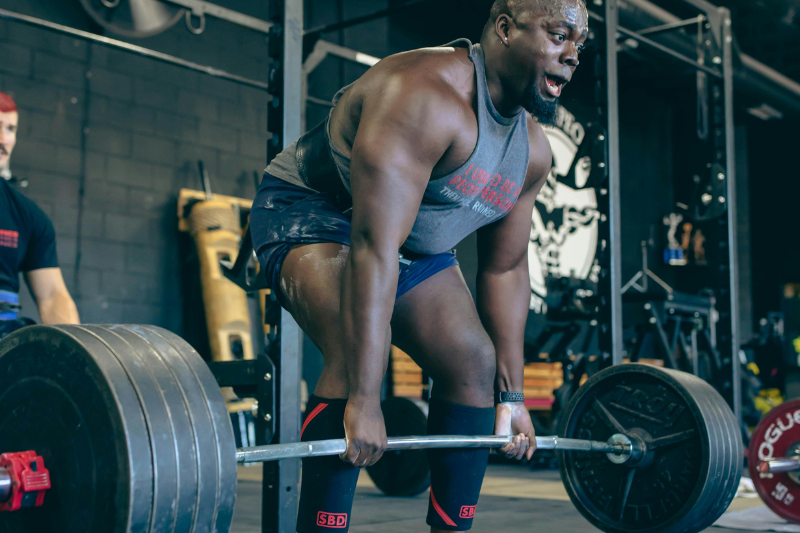
For maximum muscle growth, the best deadlift grip is a double-overhand grip with lifting straps and chalk on every working set — this keeps the load symmetric, removes grip as the weak link, and makes sure your glutes, hamstrings, and back are what actually give out, not your hands.
Keep reading to find out exactly why the other grip styles fall short, how to set your hands up correctly, and a simple session protocol you can put to use right away.
Why Your Grip Choice Actually Matters for Muscle Growth
Here's something most lifters get wrong: your grip style doesn't change how hard your glutes, hamstrings, or erectors work. Those muscles respond to load, reps, and effort — not what your thumb is doing. So why does grip matter at all?
Because grip fatigue doesn't care about your training plan.
Your finger flexors are small muscles doing an isometric job. They tire out far faster than the large dynamic muscles of your posterior chain, and when they go, the set ends — whether or not your hamstrings and erectors have done enough work to actually grow. Your hands become the bottleneck, and the muscles you're trying to build never get close to failure.
This is the real grip problem: not which muscles the grip trains, but whether it lets your target muscles reach a productive level of effort in the first place.
There's a second issue worth knowing. Asymmetric grips — where one hand is pronated and the other supinated — don't load the body evenly.
Over months and years of training, that subtle imbalance can show up as visible left-right differences in back development. For anyone training for aesthetics, that's exactly the kind of thing that's much harder to fix than it is to prevent.
So the choice of grip comes down to one question: do your hands fail first, or does your posterior chain?
The Four Main Grip Styles — What Each One Does
Each grip style comes with real trade-offs. Here's what you're actually choosing between:
Double Overhand Both palms face you, load is distributed symmetrically, and your forearms work hard to hold on. It's the most balanced grip for overall development, but it has the lowest load ceiling — most lifters hit its limit somewhere around 1.5 to 2 times their bodyweight. Useful for warm-ups and lighter back-off sets where some bare-hand grip stimulus is a bonus, but it'll give out before your posterior chain on heavy working sets.
Mixed Grip One palm faces toward you, one faces away. It's the strongest unassisted grip for most lifters, which is why so many people default to it. The problem is the cost. The supinated arm carries a real biceps tendon rupture risk — particularly under heavy eccentric loading — and the asymmetric position subtly rotates one shoulder while encouraging slightly different lat engagement on each side. Do that repeatedly over years of training and you're looking at visible back imbalances. Strong in the short term, problematic in the long run.
Hook Grip Double overhand with the thumb pinned under the fingers. It's symmetric, secure, and as strong as mixed grip for most people once adapted — but that adaptation takes time, and it's uncomfortable. Expect anywhere from a few weeks to a few months of thumb soreness before it feels normal. For lifters not competing in a strapless federation, that trade-off rarely makes sense when better options exist.
Double Overhand with Straps or Lifting Grips The symmetry of double overhand, minus the load ceiling. Straps transfer grip demand from your fingers to your wrists, so the set ends when your glutes, hamstrings, and erectors run out of steam — not your hands. This is the hypertrophy default, and the rest of this article explains exactly how to use it.
The Case Against Mixed Grip for Hypertrophy Work
Mixed grip has one thing going for it: it's strong. That's also why so many lifters never question it. But for anyone training primarily for muscle growth, the risks compound quietly over time — and they show up in places that are hard to fix.
The injury risk is real and specific. Every deadlift-related distal biceps tendon rupture on record occurred on the supinated arm — the one with the palm facing away from the body. That position places the biceps tendon under a combination of load and stretch that the pronated arm simply doesn't experience. The heavier you pull and the more frequently you pull that way, the more you're rolling the dice on a serious injury.
The structural problem runs deeper than injury risk, though. The supinated arm externally rotates the shoulder, which shifts how the lat on that side engages. The pronated side pulls slightly differently as a result.
Neither change is dramatic on any given set, but repeated across hundreds of sessions, the asymmetry accumulates — and uneven back development is one of the harder cosmetic issues to correct once it's established.
If you're going to use mixed grip at all, keep these rules in place:
- Alternate which hand is supinated from set to set
- Keep both elbows completely locked — a bent elbow on the supinated side dramatically increases biceps tear risk
- Limit it to occasional heavy singles or max-effort pulls, not your standard working sets
For regular hypertrophy training, mixed grip creates problems that straps simply don't. It's a tool worth knowing, not a habit worth building.
Why Straps and Lifting Grips Are the Smart Hypertrophy Tool
The most common objection to straps is that they're a crutch. The reality is the opposite — they're a precision tool that removes a small muscle from limiting a large one.
When grip is the bottleneck, your posterior chain gets systematically undertrained. Your hamstrings, glutes, and erectors have more in the tank, but the set ends anyway because your fingers gave out first.
Straps fix that by transferring grip demand from your fingers to your wrists, letting the actual target muscles determine when the set stops.
The performance data backs this up consistently:
- Straps increase deadlift 1RM by roughly 10%, which means more absolute load your posterior chain has to work against
- Grip strength is preserved across multiple sets rather than declining progressively through a session
- Perceived effort drops at equivalent absolute loads, meaning you can push harder without the set feeling heavier
- Women see identical benefits — more total reps per session and significantly less grip-strength loss compared to training without straps
Lifting grips like Versa Gripps work slightly differently from lasso straps — you grip a rubberized flap along with the bar rather than wrapping the bar — but the outcome is the same. They reduce wrist flexor activation without touching lat or upper-back activation at all. The forearm gets offloaded; the target muscle doesn't lose a thing.
Jeff Nippard, Mike Israetel, and Greg Nuckols have all made the same point independently: your back will always be stronger than your grip, and if you don't address that gap, your grip becomes the ceiling on your back development. Straps aren't a shortcut — they're how you make sure the right muscles are actually doing the work.
Grip Width, Hand Placement, and Chalk
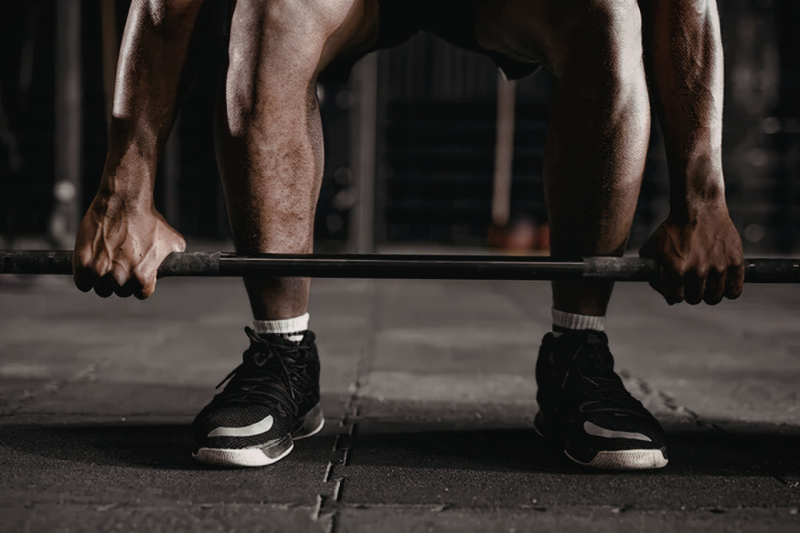
Grip style gets most of the attention, but where and how you place your hands on the bar matters too — and one overlooked habit costs you nothing and consistently improves performance.
Grip Width by Stance
- Conventional: Hands just outside the knees, roughly shoulder width. This is the narrowest position that avoids arm-thigh friction at the start of the pull and keeps the knees from caving inward. Going wider than this only increases the distance the bar has to travel without adding any meaningful stimulus to your glutes, hamstrings, or erectors.
- Sumo: Hands inside the knees, somewhere between 8 and 14 inches apart depending on your stance width and proportions.
A Note on Snatch-Grip Deadlifts
A wide snatch-grip forces a deeper hip position, more knee flexion, and significantly more upper-back, trap, and rhomboid demand — making it a legitimate accessory for upper-back hypertrophy.
That said, treat it as a separate exercise programmed once a week, not a variation on your standard pull. The upper-back benefits come from the increased range of motion and more horizontal torso angle, not the grip width itself.
Hand Placement Detail That Pays Off
Grip the bar at the base of your fingers, not deep in the palm. A palm grip forces the wrists into extension, which reduces your mechanical advantage and accelerates callus buildup in the wrong spots. Fingers-first keeps the wrists neutral and makes hand care far more manageable over time.
Chalk Every Set
Chalk is the one grip aid with no trade-offs. It costs nothing, requires zero adaptation, and improves friction between your hand and the bar immediately. One study found chalk increased rep output by over 20% compared to no chalk in a grip-dependent pulling movement. Whether you're using straps or not, chalk goes on first — every set, no exceptions.
Your Actionable Grip Protocol
Everything covered so far comes down to this. Here's exactly how to structure your grip across a session and your week.
Every Session
- Warm-up sets: Double overhand, no straps, chalk on. Use your warm-up ramp — typically 40%, 60%, and 75% of your working weight — to bank some bare-hand grip stimulus before the real work begins.
- All working sets: Double overhand with lasso straps or lifting grips, plus chalk. This applies to deadlifts, RDLs, rows, shrugs, and rack pulls — any movement where grip fatigue could cut the set short before your target muscles are done.
- Optional finisher: After your last working set, re-grip the bar bare-handed and hold the lockout position for 10 to 20 seconds. This trains grip strength without adding a single extra set to your session.
For Heavy Singles Above 85%
Hook grip is the better choice over mixed — it's symmetric and carries none of the biceps tear risk. If you use mixed grip, alternate which hand is supinated between sets and keep both elbows locked throughout the pull.
Direct Grip Work
If grip is a genuine weak point or forearm size is a specific goal, add 2 to 3 sessions per week of heavy barbell holds, dead hangs, or farmer's carries. Keep this work separate from your pulling sessions — grip fatigue going into a deadlift session will compromise performance on the movements that matter most.
The Competitor Exception
If you're preparing for a raw powerlifting meet where straps aren't permitted, begin transitioning your top sets to hook grip or alternating mixed grip at least 12 weeks before competition. That timeline gives your hands enough exposure to perform reliably when it counts.
Your Actionable Grip Protocol
Everything covered so far comes down to this. Here's exactly how to structure your grip across a session and your week.
Within Each Session
- Warm-up sets: Double overhand, no straps, chalk on. Run your warm-up ramp — typically 40%, 60%, and 75% of your working weight — bare-handed to accumulate some grip stimulus before switching over.
- All working sets: Double overhand with lasso straps or lifting grips, plus chalk. This applies to deadlifts, RDLs, rows, shrugs, and rack pulls — any movement where grip fatigue could end the set before your target muscles have done enough work.
- Optional finisher: After your last working set, re-grip the bar bare-handed and hold the lockout for 10 to 20 seconds. Effective grip training with zero added volume.
For Heavy Singles Above 85%
Hook grip is the cleaner choice — symmetric, secure, and no biceps tear risk. If you reach for mixed grip instead, alternate which hand is supinated between sets and keep both elbows completely locked throughout every pull.
Weekly Grip Work
If grip is a limiting factor or forearm size is a priority, add 2 to 3 short sessions per week of heavy barbell holds, dead hangs, or farmer's carries. Schedule them away from your pulling days — grip fatigue carried into a deadlift session directly undermines the work that matters most.
The Competitor Exception
Training for a raw powerlifting meet where straps aren't allowed? Start transitioning your top sets to hook grip or alternating mixed grip at least 12 weeks out. That window gives your hands enough time to adapt before it actually counts.
Conclusion
The grip you use on every deadlift set either lets your posterior chain do its job or quietly gets in the way.
Double overhand with straps and chalk on every working set is the simplest, most well-supported approach for building muscle without the injury risk or asymmetry that comes with other options.
Get the grip right, and everything else you're already doing in your training gets to work the way it's supposed to.