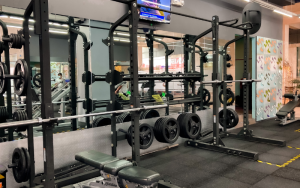
CrossFit is a structured fitness program built around constantly varied functional movements performed at high intensity — blending weightlifting, gymnastics, and cardio into short, group-based workouts designed to build broad physical fitness across ten domains including strength, endurance, speed, and coordination.
It started as a single gym in Santa Cruz, California in 2001 and has since grown into a global network of nearly 10,000 affiliated gyms, a competitive sport, and a coaching methodology backed by a growing body of research — keep reading for a full breakdown of how it works, what the evidence says, and how to get started.
What Is CrossFit and Where Did It Come From?
CrossFit is three things at once: a training methodology, a global brand, and a competitive sport. The methodology has a precise definition — “constantly varied functional movements performed at high intensity” — and a clear goal: building work capacity across broad time and modal domains. In plain terms, that means getting better at more things, rather than specializing in one.
Greg Glassman, a former gymnast, developed the method and co-founded CrossFit, Inc. with Lauren Jenai in 2000. The first gym opened in Santa Cruz, California in 2001, and Glassman began posting daily workouts online shortly after. Growth was slow at first — just 13 affiliates by 2005 — then explosive, reaching over 13,000 gyms by 2016.
Today the network sits at roughly 9,925 affiliated locations across more than 150 countries, a figure that reflects both the method's global reach and some recent contraction driven by fee increases and other industry pressures.
What makes CrossFit distinct from most fitness programs is that it deliberately resists specialization. Where a bodybuilder trains for hypertrophy and a marathoner trains for endurance, CrossFit targets ten physical domains simultaneously:
- Cardiovascular and respiratory endurance
- Stamina, strength, and flexibility
- Power, speed, and coordination
- Agility, balance, and accuracy
No single session hits all ten, but the programming rotates systematically so that, over time, nothing gets neglected. That breadth is the point — CrossFit's stated aim is to prepare you for “the unknown and unknowable” demands of physical life.
The Core Method — How CrossFit Actually Works
CrossFit's programming rests on three pillars, and understanding what each one actually means clears up a lot of common misconceptions.
Constantly varied doesn't mean random. Programming systematically rotates exercises, loads, rep schemes, and time domains so your body never fully adapts.
Functional movements are compound, multi-joint patterns — squatting, hinging, pressing, pulling — that mirror real-life tasks and move loads efficiently.
High intensity is the most misunderstood of the three: CrossFit defines it precisely as power output (force × distance ÷ time), not effort for its own sake or pushing through pain.
The 9 Foundational Movements
Everything in CrossFit builds from nine movements taught in every beginner program:
- Air squat, front squat, overhead squat
- Shoulder press, push press, push jerk
- Deadlift, sumo deadlift high pull, medicine-ball clean
These aren't arbitrary — they're building blocks. A thruster, for instance, is simply a front squat combined with a push press. Master the foundations and most other movements follow logically.
The Coaching Progression
Intensity is earned, not assumed. CrossFit's core coaching charter follows a strict sequence: mechanics first, then consistency, then intensity. You work on moving correctly, then moving correctly every rep, and only then add speed or load. Skipping steps is where injuries happen.
Workout Formats
Daily sessions — called WODs (Workout of the Day) — come in several formats, each with a different physiological emphasis:
- AMRAP (As Many Rounds/Reps As Possible): complete as many rounds of a circuit as possible within a fixed time window. Produces the highest sustained heart rates because there's no built-in rest.
- EMOM (Every Minute On the Minute): perform set reps at the start of each minute and rest whatever remains. Lowest heart rates of any format — well suited to skill and strength work.
- RFT / For Time: complete a fixed amount of work as fast as possible. Produces the sharpest early heart-rate spikes as athletes push hard from the start.
- Chipper: a long, single-pass workout — you work through a list of movements from top to bottom.
- Tabata: 20 seconds of work, 10 seconds of rest, repeated for 8 rounds (4 minutes total).
Benchmark WODs
CrossFit tracks progress through named workouts repeated every 8 to 16 weeks. The “Girl” WODs — Fran (21-15-9 thrusters and pull-ups), Cindy (20-minute AMRAP of pull-ups, push-ups, and air squats), and Grace (30 clean-and-jerks for time), among others — serve as objective fitness tests.
“Hero” WODs like Murph (a 1-mile run, 100 pull-ups, 200 push-ups, 300 squats, and another mile, often in a weighted vest) honor fallen military and first responders and are deliberately longer and heavier. Your score on these workouts over time is your most honest measure of progress.
The Real Benefits — What the Evidence Says
The research on CrossFit is more solid than its critics often acknowledge — and more nuanced than its advocates tend to admit. Here's what peer-reviewed evidence actually shows.
Cardiovascular Fitness
A 9-month beginner intervention called the StartXFit study found an 11.5% improvement in VO2max with a large effect size, alongside improved heart-rate recovery and a 2.2% rise in resting metabolic rate.
A separate review concluded CrossFit imposes high cardiorespiratory and metabolic demands that promote improvements in circulatory capacity, oxidative metabolism, and muscular endurance.
There's also a post-exercise hypotensive effect — a temporary drop in blood pressure after training — that may carry longer-term cardiovascular benefits with consistent practice.
Strength and Body Composition
Structured CrossFit programs produce substantial squat performance gains in both untrained beginners and recreationally active people.
On the body composition side, reviews consistently report reductions in fat mass alongside lean mass gains, though the magnitude varies depending on program design, coaching quality, and the individual's starting point.
Mental Health
This is where some of the most compelling data sits. The StartXFit study recorded an 8.7% rise in well-being scores on the WHO-5 index.
More broadly, a large umbrella review synthesizing 97 reviews, 1,039 trials, and over 128,000 participants found that higher-intensity exercise was roughly 1.5 times more effective than counselling or leading medications for reducing depression and psychological distress.
CrossFit's group format and strong community culture are repeatedly flagged in the literature as meaningful contributors to those mental health outcomes — the social layer isn't incidental, it's part of why it works.
Bone Density and Blood Sugar
CrossFit can positively affect bone mineral density, but the evidence suggests this requires long-term, high-volume training that exceeds 150 minutes per week of vigorous activity — occasional participation likely won't move the needle here.
On blood sugar, studies report improved regulation across general populations and in people managing type 2 diabetes, which aligns with what's known about high-intensity exercise and insulin sensitivity more broadly.
One important caveat worth flagging: a widely cited 2013 study reporting large VO2max and body-fat improvements was formally retracted in 2017. Some secondhand sources still reference it, so treat any claims tracing back to that paper with skepticism.
Risks You Should Know About

CrossFit's injury reputation is louder than the data warrants — but that doesn't mean the risks aren't real. Understanding them helps you train smarter rather than avoid the sport altogether.
Injury Rates in Context
A systematic review and meta-analysis reported a musculoskeletal injury incidence of 3.20 per 1,000 training hours. That figure is comparable to Olympic weightlifting, powerlifting, and gymnastics, and on par with or lower than rugby and other contact sports.
A separate 4-year study of over 3,000 participants found roughly 30% reported an injury in the prior 12 months — a number that sounds high until you apply the same question to most recreational sport populations.
The three most commonly injured areas:
- Shoulder — accounts for 25–39% of injuries, largely linked to overhead movements and kipping mechanics
- Spine and lower back — 14–36%, often tied to deadlift and Olympic lifting technique
- Knee — 13–15%, associated with squat depth, load, and volume
Improper form and aggravating a pre-existing injury are the leading causes across all three. Supervised coaching consistently shows up in the literature as the single most effective risk-reduction factor.
Rhabdomyolysis
Rhabdo — the breakdown of muscle tissue that can lead to kidney damage — is rare but serious enough to know about. One case series found it represented 2.1% of CrossFit-related injury presentations. It typically results from doing far too much volume too soon, particularly with eccentric movements like GHD sit-ups.
CrossFit has drawn criticism for historically treating it with a degree of dark humor, though the counterargument is that transparent disclosure of risk is better than pretending it doesn't exist.
The Overtraining Problem
The bigger day-to-day risk for most athletes isn't acute injury — it's the cultural pressure to always go Rx and always push to the limit.
Chronic overtraining leads to CNS fatigue, declining performance, disrupted sleep, and eventually burnout. Structured programming with deliberate rest days is the straightforward fix, but it requires resisting a culture that sometimes equates scaling or resting with weakness.
The 2024 Games Death
In August 2024, Serbian athlete Lazar Ðukić, 28, drowned during an open-water swim event at the CrossFit Games in Fort Worth, Texas.
The incident raised serious questions about event safety protocols, heat conditions, and the adequacy of water rescue resources. CrossFit commissioned a third-party investigation, created a new safety board, and suspended open-water swimming events.
The full investigation report was not publicly released, which drew criticism from the athlete's family and the Professional Fitness Athletes' Association.
Warning Signs to Take Seriously
Don't train through these:
- Dark or cola-colored urine, severe localized muscle swelling, or disproportionate weakness after a workout — possible rhabdomyolysis; seek emergency care immediately
- Persistent shoulder, lower back, or knee pain — stop, modify, and consult a coach or physical therapist
- Chronic fatigue, declining performance, and poor sleep — reduce volume and add rest days before the problem compounds
Scaling, Nutrition, and Recovery
Training is only part of the equation. How you adjust workouts, fuel your body, and manage recovery determines whether the training actually sticks.
Scaling
Scaling is not a concession — it's the mechanism that makes CrossFit work for nearly everyone. On any given day, at least 90% of a class will scale some part of the workout.
Rx — the prescribed version — is written for roughly the top 10% of athletes in the gym. Everyone else is intended to modify, and good coaches will tell you that directly.
The governing principle of scaling is preserving the intended stimulus. A workout designed to be fast and breathless should still feel fast and breathless at your scaled version.
If a 20-minute grind finishes in 6 minutes because you scaled too aggressively, you missed the point. If a workout designed for 4 minutes takes you 10 because the weight was too heavy, same problem — different direction.
Common modifications include:
- Pull-ups → ring rows or banded pull-ups
- Barbell → dumbbells or PVC pipe
- Reduced reps, rounds, or a shortened time domain
- Partial range of motion or tempo work during injury rehab
Advanced athletes scale too — upward, with heavier loads or harder movement variations, to stay within the intended time domain.
Nutrition
CrossFit's baseline nutrition guidance is deliberately simple: whole foods, adequate protein, little starch, no sugar, in amounts that support training without excess body fat. That's the foundation regardless of what framework you layer on top.
Two approaches have dominated CrossFit nutrition over the years:
- Zone Diet (historically endorsed): roughly 40% carbohydrate, 30% protein, 30% fat, measured in blocks. An average woman eats around 11 blocks per day; an average man around 14.
- Macro counting / IIFYM: now the most common approach among competitive athletes, offering more flexibility than Zone while still hitting protein and energy targets.
Paleo was closely associated with CrossFit for years but has largely fallen out of favor as the evidence base for it weakened. A large athlete survey found macro counting was the most common dietary approach at 18.6%, followed by intermittent fasting at 7.7% and Paleo at 6.1%.
For workout fueling specifically: eat a balanced carbohydrate and protein meal one to two hours before training, and refuel within roughly an hour after.
Prioritize protein at every meal and use supplements — protein powder, creatine, omega-3s — to fill gaps rather than replace whole foods.
Recovery
CrossFit's own framework treats recovery as part of the program, not an afterthought. Sleep and nutrition sit at the base of CrossFit's development hierarchy — below conditioning, gymnastics, and weightlifting.
The traditional training structure is three days on, one day off, though beginners should start at two to three days per week and add volume only when soreness and sleep quality allow. Chronic fatigue and declining performance are signals to pull back, not push through.
How to Get Started
Getting into CrossFit is more straightforward than the intimidating-looking workouts suggest. Here's how to do it without wasting time or setting yourself up for a bad experience.
Finding the Right Gym
CrossFit's gym locator covers more than 10,000 affiliates across 150+ countries, so finding one nearby is rarely the problem.
Choosing the right one is. Membership typically runs $150–200 per month, which is higher than a commercial gym but reflects small group coaching rather than open floor access.
When you visit — and you should visit before committing — watch an actual class. Look for:
- Coaching credentials: CF-L2 or higher is the standard worth looking for; CF-L1 is the minimum to coach but represents a lower bar
- Class size: smaller classes mean more coaching attention per athlete
- Community feel: the atmosphere in a box is a genuine retention factor; a gym where people stay and talk after class is usually a good sign
The On-Ramp Program
Most affiliates require new members to complete a fundamentals or on-ramp course before joining regular classes. Don't skip this.
It's where you learn the 9 foundational movements, understand scaling, and build the base that makes regular programming both safer and more effective. Jumping straight into WODs without this foundation is how people get hurt or discouraged early.
Your First Class
A standard CrossFit class runs about 60 minutes and follows a consistent structure:
- Whiteboard brief — the coach explains the workout, movements, and scaling options
- Warm-up — general movement prep and mobility
- Skill or strength segment — focused practice or a lifting piece
- WOD — the main workout
- Cooldown — stretching and recovery work
Tell the coach it's your first class and disclose any injuries upfront. Don't compare your score to anyone else's — your first result is simply a baseline, nothing more.
Training Frequency and Progress Tracking
Start at two to three days per week and let your body adapt before adding more. Moving to four or five days is reasonable after a few months, but only when soreness is manageable and sleep quality stays consistent. Adding volume on top of poor recovery is counterproductive.
Track your scores from day one and re-test a benchmark workout — Fran and Cindy are good starting points — every 8 to 16 weeks. Objective retesting is CrossFit's built-in progress check, and it's more reliable than how you feel on any given day.
What You Actually Need
Flat-soled shoes and a water bottle. The affiliate supplies barbells, plates, pull-up bars, kettlebells, rowers, and everything else. As you progress, lifting shoes, a jump rope, and chalk become useful additions — but none of that is relevant on day one.
Conclusion
CrossFit is a well-structured training method with a legitimate evidence base, a global community, and enough flexibility to work for a wide range of people — provided you approach it with the right mindset.
Start with a quality affiliate, respect the fundamentals-before-intensity progression, scale intelligently, and treat nutrition and recovery as part of the program rather than optional extras.
Do those things consistently, and the method largely takes care of the rest.