The five exercises that will build a real pullup are scapular pullups, dead hangs, inverted rows, eccentric (negative) pullups, and the hollow-body hold — each one targeting a specific weak link that keeps most people stuck on the bar.
Keep reading to see exactly how each move works, why it matters, and how to fit them into a weekly plan that gets results.
Why Most People Can't Do a Pullup (And What's Actually Going Wrong)
Pullup failure tends to follow a predictable pattern, and once you know what to look for, it's hard to unsee. The most common culprit is what coaches call the “shrug and yank” — instead of the lats driving the movement, the biceps and upper traps take over and try to muscle the rep out. The result is a jerky, inefficient pull that breaks down fast and builds nothing useful.
But weak lats are rarely the whole story. Most people are dealing with several problems at once:
- Grip that quits early — the hands give out before the back even gets a real workout, cutting the set short for the wrong reason
- A swinging body — when the core doesn't fire, the legs swing forward and the rep becomes a momentum game instead of a strength one
- No strength at the top — most reps die in the upper half of the pull, and that's an eccentric strength problem; if you've never trained the slow, controlled descent, you won't have the capacity to grind through it on the way up
There's also a less obvious issue: most people simply haven't done enough horizontal pulling to support a vertical demand. Rows, inverted rows, and similar movements build the scapular control and back thickness that pullups depend on — skip them in your training, and you're essentially trying to run before you've learned to walk.
The five exercises in this article address each of these gaps directly.
Scapular Pullups — Train the Start of the Pull
If there's one exercise that consistently gets skipped by people training for their first pullup, it's this one — and that's a mistake. The scapular pullup doesn't look impressive, but it directly trains the firing pattern that makes a real pullup possible.
How to do it: Hang from the bar with your arms completely straight. Without bending your elbows at all, drive your shoulder blades down and back, lifting your chest a few inches toward the bar. Hold for one to three seconds, then release back to a full hang. That's one rep.
The movement feels small because it is small — but that's the point. What you're training is the initiation: getting the lower traps and lats to fire first, before the elbows ever bend. This is the correct sequence for a pullup, and most people have it backwards.
When the lat is already loaded and engaged at the bottom, it's primed to do its job through the rest of the rep. When it's not, something else takes over — usually the biceps or upper traps — and the shrug-and-yank pattern kicks in.
For programming, 3–5 sets of 5–10 reps is a solid starting point. It's light enough to run as a daily warm-up before any upper body session, which is actually how many coaches prefer to use it — not as a standalone strength exercise, but as a consistent primer that grooves the right movement habit over time.
Do it often enough and the lat-first firing pattern starts to feel automatic, which is exactly what you want when you're hanging from a bar working toward your first strict rep.
Dead Hangs and Active Hangs — Build the Grip and Bar Tension You're Missing
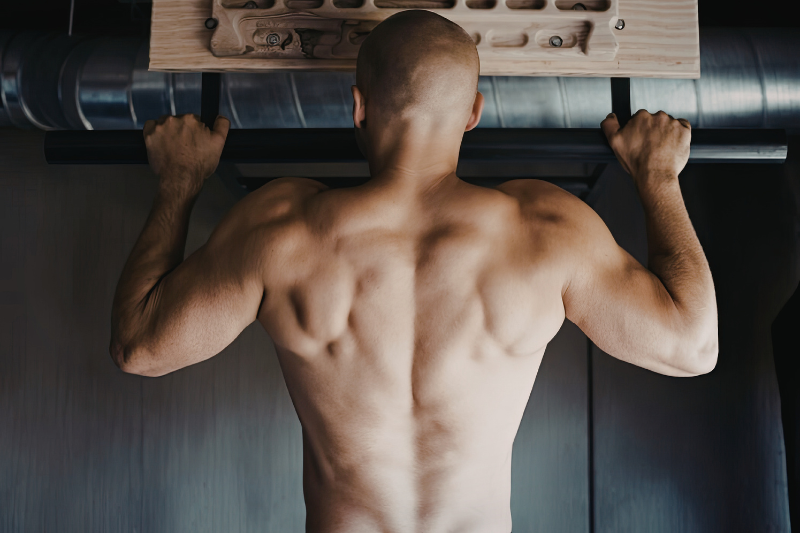
Here's a quick way to diagnose where your pullup training needs to start: hang from a bar and see what gives out first. If your hands quit before your back feels anything, grip is your limiting factor — and no amount of lat work will fix that until you address it directly. The dead hang is where you start.
There are two versions, and both matter:
- Passive hang — arms straight, body relaxed, just holding on. Build up to 60 seconds of continuous hang time before worrying about much else.
- Active hang — same position, but with the shoulder blades pulled down and engaged, like the bottom of a scapular pullup. Same time target: 60 seconds.
The active hang is the more valuable of the two for pullup development because it keeps the lats and lower traps switched on while you're building grip endurance — you're essentially practicing bar tension in the exact position every pullup starts from.
For a practical starting point, work in 30-second sets with 60 seconds of rest between them. Six rounds is a reasonable benchmark to work toward. As grip improves, extend the hold duration rather than cutting the rest shorter.
No bar at home? Heavy dumbbell holds work as a legitimate substitute — hold a pair of dumbbells at your sides for 30 to 60 seconds and you'll hit the same forearm and hand muscles that bar hanging develops. It's not identical, but it keeps the adaptation moving between gym sessions.
Inverted Rows and Eccentric Pullups — The Two Moves That Build the Actual Strength
These two exercises do the heavy lifting — literally. If the scapular pullup and dead hang are about pattern and preparation, inverted rows and eccentric pullups are where real pulling strength gets built.
Inverted Rows
The inverted row hits the same muscles as a pullup — lats, rhomboids, mid-traps, biceps — but lets you control exactly how much load you're working with by adjusting your body angle. The more horizontal your body, the harder the row. Start at a steeper angle and work your way down as you get stronger.
A concrete progression target: once you can do 3 sets of 8 reps with your body at 45° or lower, you're ready to move on to negatives. Until then, the inverted row is your primary strength builder.
Eccentric (Negative) Pullups
The negative pullup is the single most universally recommended exercise across pullup training — and the reason comes down to basic physiology.
Your muscles can handle roughly 1.5 times more load on the way down than on the way up, which means the eccentric is where you can build strength that your concentric isn't ready for yet.
How to do it: Jump or step up to get your chin over the bar, then lower yourself as slowly and controlled as possible — aim for 3 to 7 seconds on the way down.
Two technique points that matter:
- Pause at your sticking point — wherever the descent feels hardest, stop and hold for a beat. That's the exact range where you need more strength, and pausing there builds it.
- Don't drop at the bottom — releasing tension and bouncing out of the dead hang puts real stress on the shoulder, and it's an easy way to get hurt. Lower all the way down with control, every single rep.
The Hollow-Body Hold — Stop the Swing That's Wasting Every Rep
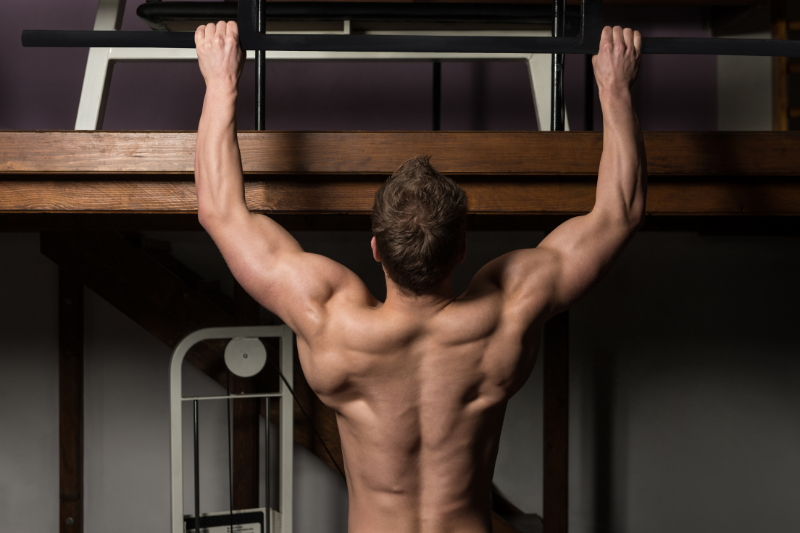
A swinging body during a pullup isn't just a form issue — it's a force leak. Every time your legs drift forward and your hips break position, energy that should be driving you up is going sideways instead. The hollow-body hold fixes that, and it starts on the floor.
How to do it: Lie on your back and press your lower back firmly into the ground — no gap between your spine and the floor.
From there, lift your head, arms, and legs simultaneously into a curved dish shape, like a shallow banana. Hold that position while keeping the lower back pressed down. Start with 3 sets of 5-second holds and build from there.
It sounds simple, but maintaining that lower back contact while everything else is lifted is harder than it looks. That tension you feel through the abs and trunk is exactly what needs to show up when you're hanging from a bar.
The reason this transfers so directly to the pullup is that it's the same body line, same tension pattern — just on the floor instead of overhead. It also activates the serratus anterior, a muscle most people never think about, which plays a real role in connecting the lat to the rest of the trunk. Without that connection, the lat pulls in isolation and the body swings to compensate.
Once you can hold a solid hollow position on the floor for time, take it to the bar. Grip and hang while holding the same dish shape — no leg swing, lower back slightly rounded, body tight.
Aim for 10 to 30 seconds. This hollow hang is as close as you can get to rehearsing a strict pullup without actually pulling, and it's the last piece of the puzzle before everything comes together.
How to Put It All Together Into a Weekly Plan
The exercises only work if the programming behind them is solid. Here's how to structure it.
Frequency: Two sessions per week for the first four to eight weeks. Once recovery feels easy and performance is trending up, add a third day. More than that early on tends to slow progress rather than speed it up.
Session order: Run the exercises in the sequence they appear in this article — it mirrors the logic of how the pullup actually works.
- Scapular pullups (warm-up)
- Dead hang
- Inverted rows
- Eccentric pullups
- Hollow hold (finisher)
Rest periods: Keep it simple. Sixty seconds between sets for the scapular pullups, hangs, and hollow holds. Ninety seconds to two minutes for inverted rows and negatives — these are the heaviest demands and shortchanging the rest will show up in your form before long.
Progression: Use the 2-for-2 rule — when you can add two reps across two consecutive sessions, advance the variation. It's a conservative benchmark, but it keeps quality high and reduces the temptation to rush.
One principle that coaches across the board agree on: never train these exercises to failure. Leave one to three reps in reserve every set. Grinding out ugly reps doesn't build the pullup pattern — it trains your nervous system to struggle, which is the opposite of what you want.
On resistance bands: They're not useless, but their role is limited. The problem with bands is that they assist you most at the bottom of the pull — exactly where you need to build strength. Use them occasionally to practice the movement pattern, but build your actual strength through negatives and inverted rows.
Realistic timeline: Expect to feel the pattern clicking into place around the four-week mark. A first strict rep typically arrives somewhere between two and three months in. That might sound slow, but it holds up — and a pullup earned this way tends to turn into ten.
Conclusion
The pullup isn't just a strength test — it's a coordination pattern that the right training unlocks.
These five exercises work because they each fix a specific reason people fail, and together they build the complete chain the lift actually demands.
Train them twice a week, keep the quality high, and the reps will follow.