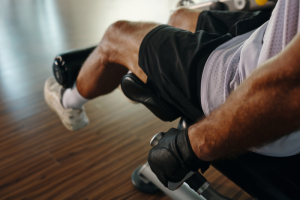
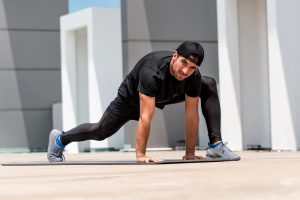
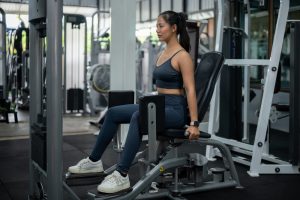
The five gym machines you should avoid are the seated leg extension machine, Smith machine, seated rotary torso machine, hip abductor/adductor machines, and the seated chest fly (pec deck).
These popular pieces of equipment force your body into unnatural movement patterns that can damage your joints, strain your spine, and create muscle imbalances that increase your injury risk.
Keep reading to understand exactly why each machine is problematic and what you should use instead to build real strength safely.
Seated Leg Extension Machine
This machine puts substantial stress on your patellofemoral joint—the spot where your kneecap meets your thigh bone.
The way it positions resistance at your ankles creates a long lever arm that multiplies force on your knee, generating high compressive forces on your kneecap.
At the same time, shearing forces stress your knee ligaments, particularly the posterior cruciate ligament (PCL).
The real problem goes beyond joint stress.
Your quadriceps don't work in isolation during any natural movement—they function alongside your glutes and hamstrings to create stable, coordinated motion.
This machine forces an unnatural pattern that rarely happens in real life.
Over time, this isolation creates muscle imbalances: your hamstrings become tight and overactive while your glutes stay underdeveloped.
The result is a higher risk of hamstring pulls and knee injuries.
What to do instead: Squats, lunges, Bulgarian split squats, and step-ups all strengthen your quads while simultaneously engaging your glutes, hamstrings, and core muscles.
These compound movements build functional strength that actually translates to how you move outside the gym—whether you're climbing stairs, playing sports, or just going about your day.
Smith Machine
The Smith machine locks you into a perfectly vertical, fixed bar path—and that's the core of the problem.
When you squat or press naturally with free weights, your body moves both vertically and horizontally to maintain proper center of gravity and joint alignment.
The machine eliminates these natural adjustments, forcing your joints to adapt to the equipment instead of moving the way they're designed to.
The numbers tell the story: research shows 43% less muscle activation during Smith machine squats compared to free-weight squats.
That's because the fixed path dramatically reduces engagement from your stabilizer muscles—particularly in your core and the smaller muscles that protect your joints.
This creates multiple risks. You'll experience increased stress on your lower back and knees, and the faulty center of gravity leaves your spine vulnerable.
The movement patterns you develop don't transfer to real-life activities or sports performance.
Studies have even demonstrated that Smith machine squats can place dangerous stress on ACL grafts—we're talking levels several times higher than their breaking load.
Swap to free-weight barbells or dumbbells for squats, bench press, and overhead press.
If you want extra support while building confidence, try goblet squats with a kettlebell or dumbbell held at chest height, or work with a spotter who can assist when needed.
Seated Rotary Torso Machine
Many experts consider this one of the most dangerous pieces of equipment in the gym.
Your lumbar spine is designed to handle vertical compression forces, but it's not built for high-degree twisting movements under load.
While your thoracic spine (mid-back) handles rotation better, this machine isolates the rotation in your lumbar region—exactly where you don't want it.
Here's what happens inside your spine: your intervertebral discs contain collagen fibers arranged in layers.
When you twist your spine under load on this machine, you progressively damage these fibers.
Renowned spine researcher Dr. Stuart McGill warns that people often do well initially, then “the discs in their spine abruptly become highly symptomatic.”
This leads to nerve damage, shooting leg pain, and emergency trips to the chiropractor.
The machine creates what one physiotherapist calls a “terrible triad”—it combines flexion, rotation, and side bending simultaneously at your lumbar spine.
That's three compromising movements happening at once in a region that wasn't designed for this kind of stress.
The right approach: Your core muscles are designed to resist rotation, not create it.
Try anti-rotation exercises like Pallof presses, where you hold a cable or band and resist its pull trying to rotate you.
Cable wood chops work better too since your whole body rotates from the hips.
Planks and side planks also build genuine core stability.
Hip Abductor/Adductor Machines
These machines isolate your inner and outer thigh muscles while you're seated in a fixed range of motion.
The problem is that this movement pattern has nothing to do with how these muscles actually function.
Your hip muscles are designed to stabilize your pelvis and work in coordination with other muscles during dynamic movements—walking, running, changing direction.
The forced leg opening and closing motion places excessive stress on your hip capsules and IT bands, which can lead to groin strain.
Worse, the machine can make your IT band so tight that it actually pulls your kneecap out of alignment.
It also strains your spine and creates muscle imbalances because these muscles never learn to work as stabilizers during functional movement patterns.
Better options: Single-leg exercises like single-leg squats, lunges, step-ups, or side lunges require your hip abductors and adductors to work as stabilizers while simultaneously engaging your glutes, quads, and core.
Resistance band lateral walks are also excellent—they target these muscles in a way that mimics how you actually use them outside the gym.
Seated Chest Fly (Pec Deck) Machine
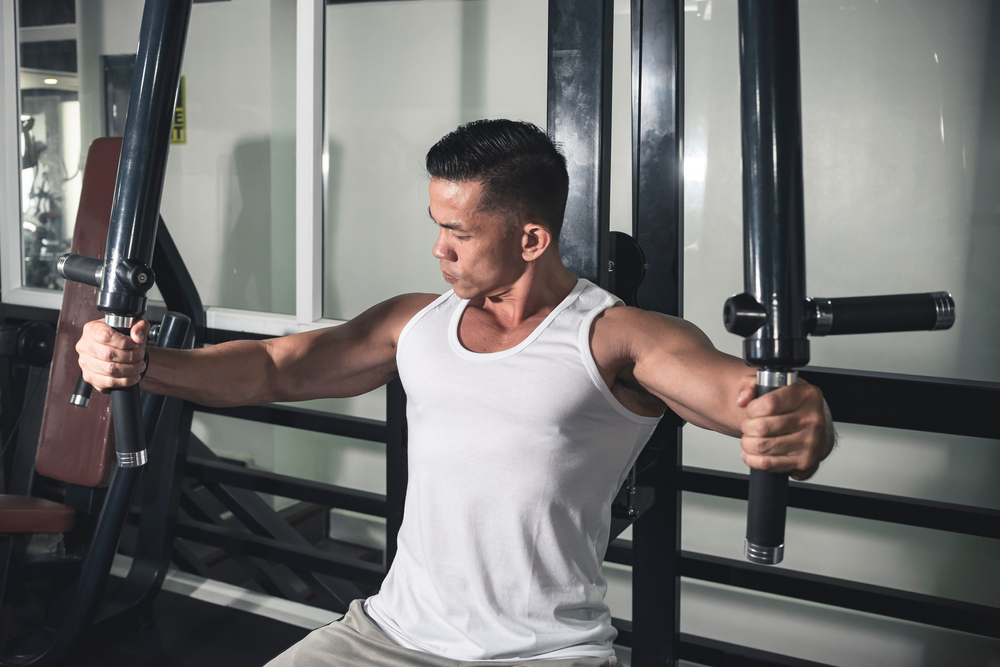
This machine forces your shoulders into a “high five” position with significant external rotation under load.
While it does effectively target your pectoral muscles, it places your shoulder joint in an unstable and compromising position.
Research on weightlifters with shoulder pain found that 100% of participants reported pain reproduction when using the pec deck.
Most people already have shoulders that are pulled forward from desk work and excessive chest training.
The pec deck makes this worse by yanking your arms backward at the end range of motion, which can harm your shoulder joints, damage your rotator cuffs, and create joint impingements.
If you relax at the end of a set, the machine can cause sudden shoulder injury.
Safer alternatives: Standard push-ups engage both sides of your chest equally while incorporating core stabilization.
Dumbbell chest presses on a flat or incline bench allow for natural movement patterns and equal loading of both arms.
Cable crossovers also provide a safer range of motion with significantly less shoulder stress—you get the chest activation without putting your shoulders at risk.
What This Means for Your Workouts
These problematic machines share common traits: they isolate muscles unnaturally, force your joints through fixed paths that don't match individual biomechanics, reduce stabilizer muscle engagement, and create movement patterns that don't transfer to real life or sports.
Exercise machines were originally designed to make weightlifting “safer,” but those fixed patterns often create new problems.
Your body is designed for complex, multi-planar movements involving multiple muscle groups working together.
Prioritize free-weight exercises and bodyweight movements that allow natural ranges of motion and engage your stabilizers.
When you do use machines, choose those that support natural movement patterns—cable machines, the leg press (with proper form), and lat pulldown machines with proper bar positioning are all acceptable options that won't compromise your joints or limit your progress.
Conclusion
Avoiding these five machines isn't about limiting your workout options—it's about protecting your body while building strength that actually matters.
The gym has plenty of equipment that works with your natural movement patterns instead of against them.
Make the switch to free weights and functional exercises, and you'll see better results with far less risk of injury down the road.