The five best hip adductor exercises for inner thigh development are the Copenhagen adductor exercise, the seated hip adduction machine, cable hip adduction, the Cossack squat, and the wide-stance sumo squat.
Each one targets the adductors differently, so keep reading to see exactly how to perform them, how many sets and reps to do, and how to put them all together into a program that actually works.
The Copenhagen Adductor Exercise
No other adductor exercise comes close to the research support behind this one. It produces 108% of maximum voluntary contraction in the adductor longus — that's higher than any other tested movement.
Eight weeks of consistent training has been shown to increase eccentric hip adduction strength by 35.7%, and when added to team training programs, it cut groin problems by 41%.
How to do it:
- Lie on your side next to a bench, propped up on your forearm with your elbow under your shoulder.
- Rest your top leg on the bench — at the knee if you're a beginner, at the ankle once you've built up.
- Keep your bottom leg straight and hovering off the floor.
- Press your top leg into the bench and lift your hips into a straight side plank position.
- Raise your bottom leg toward the top by squeezing your inner thigh, hold briefly, then lower it over 3 seconds.
That slow lowering is the point — the eccentric phase is where most of the strength and injury-prevention benefit comes from, so don't rush it.
Programming: Start with 2 sets of 6 reps per side at the short lever. Over 6–8 weeks, work up to 3 sets of 15 at the long lever (ankle on bench). The most common mistakes are letting your hips sag, bending your bottom knee, and moving too fast on the way down.
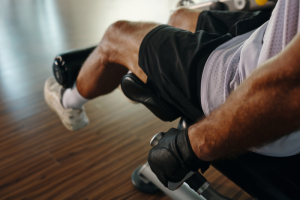
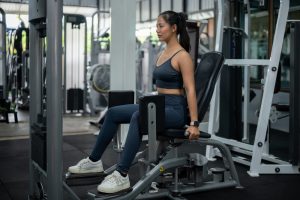
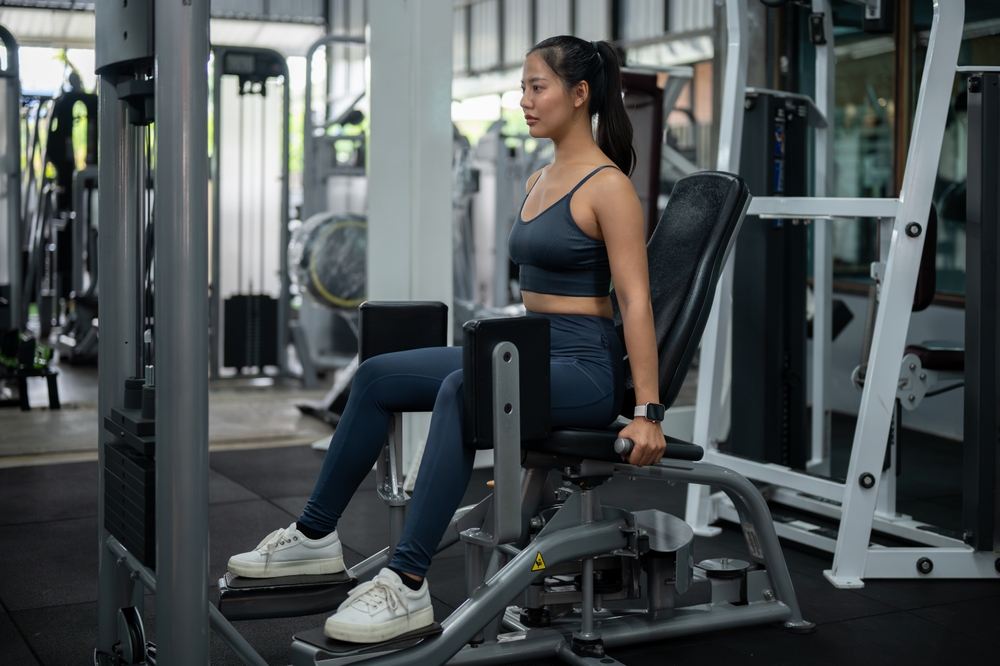
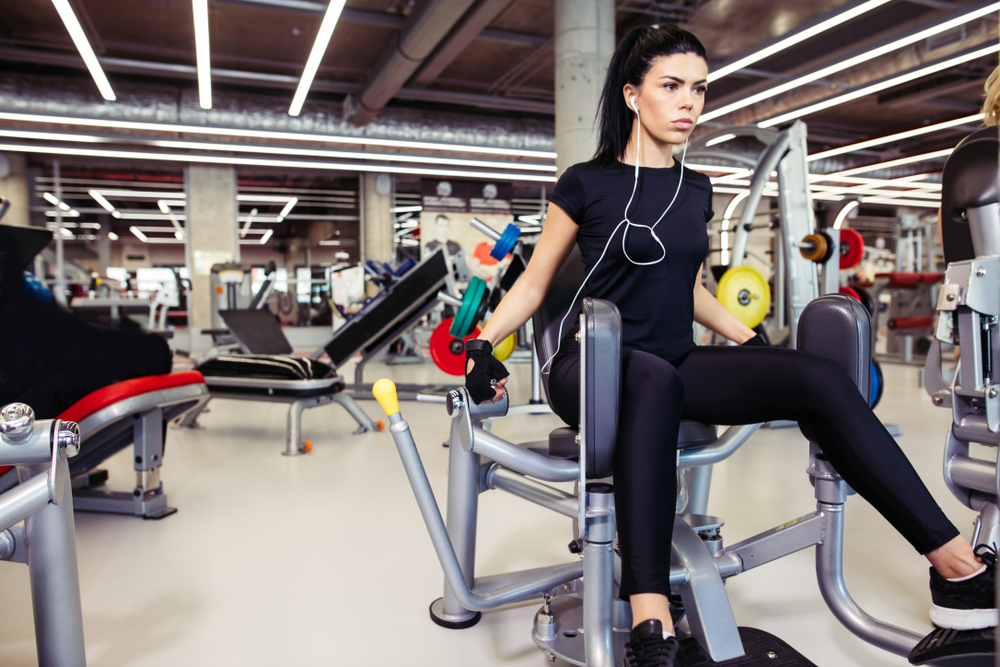
Seated Hip Adduction Machine
The adductor machine has a reputation as a vanity exercise, but the research doesn't support that dismissal.
Studies show it produces adductor longus activation comparable to elastic-band adduction, and its real advantage is practical: it's the easiest way to load both legs symmetrically and add weight in small, measurable increments over time.
One detail most people miss is how torso position shifts the target. Leaning slightly forward increases adductor longus engagement, while sitting fully upright moves more of the work to the gracilis and pectineus. Neither is wrong — just worth knowing if you want to target a specific area.
How to do it:
- Sit with your back flat against the pad and place your inner thighs against the pads just above the knees.
- Start with your legs at the widest comfortable position.
- Squeeze your thighs together slowly until the pads nearly touch, then pause for 1–2 seconds.
- Return to the start over 2–3 seconds — don't let the weight stack drop.
Programming: 3–4 sets of 10–15 reps works well for hypertrophy. Dropsets are particularly effective here — do 10 reps, reduce the weight by 20%, then go to failure. The key is full range of motion in both directions and genuine inner thigh tension throughout. Fast, heavy reps with momentum are significantly less effective than slow, controlled ones with a hard squeeze at the top.
Cable Hip Adduction
What makes cable adduction worth including alongside the machine is the resistance profile. The machine unloads slightly at the end range; the cable doesn't. You get constant tension through the full movement, which makes it particularly effective at the point of peak contraction where other exercises tend to let the muscle off the hook.
It also trains one leg at a time, which matters more than most people realize. Side-to-side strength imbalances are a known risk factor for groin injuries, and unilateral work is the most direct way to find and fix them.
How to do it:
- Attach an ankle strap to the lowest pulley and secure it to the ankle closest to the machine.
- Step 1–2 feet away to create starting tension, standing on your outside leg with a slight knee bend.
- Hold the machine's frame for balance, keep your foot flexed, and sweep your working leg across your body past the midline.
- Pause and squeeze at peak contraction for 1 second, then resist the cable on the way back over 2–3 seconds.
Speed kills activation on this exercise — slow, deliberate reps with a flexed foot outperform fast ones every time. If you're leaning heavily to one side to compensate, drop the weight.
Programming: 3–4 sets of 10–15 reps per side for hypertrophy, or 6–8 reps at heavier loads for strength. Pair it with the Copenhagen exercise and you've covered the full adductor strength curve — the Copenhagen is hardest at the bottom of the range, while the cable delivers its greatest challenge right at the top.
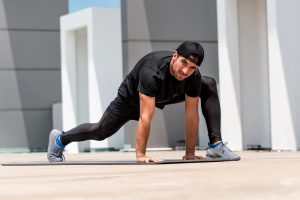
Cossack Squat
The Cossack squat does something no isolation exercise can — it loads the adductors eccentrically through a deep stretch while improving hip mobility at the same time. That combination of eccentric strength and fascicle length development has the highest carry-over to both injury prevention and athletic performance. It also ranks third for adductor longus activation among tested rehab exercises, which puts it ahead of a lot of movements people consider more “serious.”
How to do it:
- Stand with feet about 4 feet apart, toes slightly turned out.
- Shift your weight to one side, bending that knee and descending into a deep lateral squat.
- As you go down, let the straight leg rotate so the toes lift while the heel stays planted.
- Lower until your squatting thigh reaches parallel or deeper, keeping your chest up and squatting foot flat.
- Drive through the heel to return to the wide stance, then alternate sides.
Holding a light kettlebell or dumbbell at chest height actually helps with balance rather than making it harder — it shifts your center of gravity forward just enough to keep you from tipping back.
Programming: Start with bodyweight only for 3–4 sets of 6–10 reps per side. Once you can hit 10 clean reps, add a 12–25 lb kettlebell. The three mistakes that derail this exercise are forcing depth beyond what your current flexibility allows, letting the squatting heel rise, and rounding the lower back on the way down. If any of those are happening, reduce your range and build it gradually — rushing depth here is exactly how adductor strains occur.
Wide-Stance Sumo Squat
If visible inner thigh mass is the goal, this is the exercise that actually moves the needle. The adductor magnus is the largest muscle in the adductor group — roughly the same size as the vastus lateralis — and it's the primary driver of inner thigh size. It reaches 100% of maximum voluntary contraction during hip extension, which means no isolation exercise can fully replace heavy loaded squats for developing it. Research backs this up: deep squatting produced 6.2% adductor volume increases over 10 weeks, putting adductor growth on par with quad growth from the same training.
How to do it:
- Set your feet at 1.5–2x shoulder width with toes turned out 30–45 degrees.
- Hold a dumbbell or kettlebell at chest height in a goblet position, or use a barbell across your upper back.
- Brace your core, keep your chest up, and push your hips back as you bend your knees.
- Lower until your thighs reach at least parallel — deeper is better for adductor magnus activation.
- Drive through your heels to stand, actively pressing your knees outward throughout the ascent.
Depth is non-negotiable here. The adductor magnus does most of its work coming out of the bottom position, so cutting the squat short largely defeats the purpose.
Programming: For hypertrophy, 3–4 sets of 8–12 reps with moderate-to-heavy load. For strength, shift to 4–6 sets of 4–6 reps. The most common mistakes are letting the knees cave inward on the way up, going wider than your hip mobility genuinely allows, and squatting too shallow. Keep your shins roughly vertical when viewed from the front — if they're not, your stance is probably too wide.
How to Program All Five Together
Research supports 6–12 direct adductor sets per week, spread across 2–3 sessions. Here's a practical way to split them:
Day 1: Sumo squats + seated adduction machine Day 2: Cossack squats + cable hip adduction Copenhagen: Add 2–3 sets to either session or use it as a warm-up on both days
This pairing isn't arbitrary. Day 1 combines the heaviest compound movement with the machine's bilateral loading. Day 2 pairs the mobility-demanding Cossack squat with cable work while your hips are already warmed up through range.
Rep ranges by exercise type:
- Sumo squats: 6–8 reps for strength, 8–12 for hypertrophy
- Machine and cable adduction: 10–15 reps
- Cossack squats: 6–10 reps per side
- Copenhagen: follow the 6–8 week progression from 2×6 to 3×15
For all isolation work — machine, cable, and Copenhagen — use a 2-second eccentric, 1-second pause, and 2-second concentric. That tempo keeps tension on the muscle throughout the rep and is significantly more effective than moving at whatever speed feels natural.
Progressive overload by exercise:
- Seated machine and cable: Add weight in small increments when you complete all reps with clean form
- Copenhagen: Progress by moving bench contact from knee to mid-shin to ankle over several weeks
- Sumo squat: Add load to the bar or dumbbell as you would any compound lift
- Cossack squat: Increase depth first, then add load once 10 controlled reps per side feel comfortable
One thing worth noting — the Copenhagen exercise only needs one session per week for maintenance once you've built a base. If you're in a busy training block, that's the first thing you can scale back without losing much ground.
Conclusion
Most leg programs underserve the adductors, which is why intentional programming makes such a noticeable difference.
These five exercises cover the full spectrum — from peak activation and injury prevention with the Copenhagen, to raw inner thigh mass with the sumo squat, to eccentric mobility with the Cossack, to straightforward progressive overload with the machine and cable.
Train them consistently with the structure above and you'll build inner thighs that are stronger, more resilient, and visibly more developed.