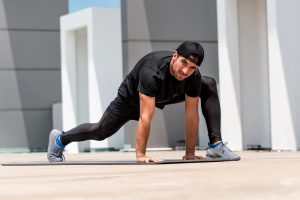
The three best superset workouts are a full-body foundation routine for beginners (2x per week, 12-15 reps), a volume and intensity builder for intermediates (3-4x per week, 8-12 reps), and a maximum intensity protocol for advanced lifters (4-5x per week, 6-12 reps with advanced techniques).
Each program cuts your gym time by up to 25 minutes while delivering the same muscle growth and strength gains as traditional training.
Keep reading to get the complete workout breakdowns, exercise-by-exercise instructions, and critical implementation guidelines that'll help you start seeing results immediately.
What Are Supersets and Why They Work
A superset is exactly what it sounds like—you perform two exercises back-to-back with little to no rest between them.
This simple approach delivers something remarkable: studies show you can cut your workout time from 69 minutes down to 44 minutes while achieving the same muscle growth and strength gains as traditional training.
The method works through three distinct pairing strategies:
Antagonistic supersets target opposing muscle groups, such as pairing chest presses with rows. While your chest recovers, your back works, and vice versa.
Synergistic supersets hammer the same muscle group twice in a row. Think bicep curls immediately followed by hammer curls—you're pushing that muscle to complete exhaustion.
Compound supersets combine exercises for entirely different muscle groups, like squats followed by shoulder presses. Your legs rest while your shoulders work.
What makes supersets so effective goes beyond just saving time.
You're increasing time under tension, which means your muscles work longer during each set.
Your heart rate stays elevated throughout the workout, giving you cardiovascular benefits on top of strength training.
The approach also creates significant metabolic stress—one of the key drivers your body needs to build muscle.
Here's what matters most for your goals: this training style works equally well whether you're focused on building muscle or losing fat.
The elevated metabolic demand means you're burning more calories while still providing enough stimulus for growth.
When you program these workouts correctly for your fitness level, you get a method that adapts to beginners learning movement patterns all the way up to advanced lifters breaking through plateaus.
Beginner Superset Workout: Full-Body Foundation
Train twice per week with at least one full day between sessions.
You'll complete 3-4 supersets using 12-15 reps per exercise, resting 60 seconds between each pairing.
This structure works because beginners need to master movement patterns before chasing heavy weights.
Research shows that full-body approaches using a mix of machines and free weights help you build foundational strength endurance while learning proper form.
The higher rep ranges create manageable fatigue—enough to stimulate growth but not so much that your technique falls apart halfway through a set.
Your goal here isn't maximal strength.
You're building endurance and teaching your nervous system how to coordinate muscle contractions efficiently.
Pick weights that challenge you within the prescribed rep range but still allow you to maintain clean form from the first rep to the last.
Superset 1: Lower Body Foundation
- Goblet Squats: 3 sets x 12-15 reps
- Dumbbell Step-Ups: 3 sets x 12 reps per leg
- Rest 60 seconds
Superset 2: Upper Body Push-Pull
- Dumbbell Chest Press (flat or incline): 3 sets x 12-15 reps
- Dumbbell Rows (supported on bench): 3 sets x 12-15 reps per arm
- Rest 60 seconds
Superset 3: Posterior Chain & Core
- Glute Bridges (bodyweight or dumbbell): 3 sets x 15 reps
- Plank Hold: 3 sets x 20-30 seconds
- Rest 60 seconds
Superset 4: Arms & Shoulders
- Dumbbell Shoulder Press: 3 sets x 12 reps
- Bicep Curls: 3 sets x 12-15 reps
- Rest 60 seconds
This workout hits every major muscle group in under 45 minutes.
The antagonistic pairing in Superset 2 lets your chest recover while your back works, keeping intensity high without overwhelming your system.
Start conservative with weight selection—you can always add load once you've nailed the movement patterns.
Intermediate Superset Workout: Volume & Intensity Builder
After six months of consistent training, your body can handle significantly more work.
Train 3-4 times per week, mixing upper-body, lower-body, and full-body sessions.
You'll complete 4-5 supersets with 8-12 reps per exercise, taking 60-90 seconds rest between pairings.
The 8-12 rep range sits in the sweet spot for hypertrophy—enough load to create mechanical tension but enough volume to maximize metabolic stress.
Research shows intermediate lifters get the most from antagonistic supersets because they allow active recovery.
While your chest works, your back recovers, and vice versa.
This keeps intensity high without frying your central nervous system the way back-to-back chest exercises would.
Control the weight through the full range of motion.
You're past the phase of just learning movements—now you're maximizing work capacity while building serious muscle.
Superset 1: Heavy Compound Movements
- Barbell Bench Press: 4 sets x 8-10 reps
- Barbell Rows: 4 sets x 8-10 reps
- Rest 90 seconds
Superset 2: Lower Body Strength
- Front Squats or Barbell Squats: 4 sets x 8-10 reps
- Romanian Deadlifts: 4 sets x 10-12 reps
- Rest 90 seconds
Superset 3: Vertical Push-Pull
- Dumbbell Overhead Press: 3 sets x 10-12 reps
- Pull-Ups or Lat Pulldowns: 3 sets x 10-12 reps
- Rest 60 seconds
Superset 4: Unilateral Lower Body
- Walking Lunges (dumbbells): 3 sets x 10 reps per leg
- Single-Leg Deadlifts: 3 sets x 10 reps per leg
- Rest 60 seconds
Superset 5: Arms Finisher
- Barbell Curls: 3 sets x 10-12 reps
- Overhead Triceps Extension: 3 sets x 10-12 reps
- Rest 60 seconds
The first two supersets use 90-second rest periods because compound movements with barbells demand more recovery.
The antagonistic pairing still lets you maintain high intensity—your pressing muscles rest while you row, keeping your heart rate elevated without compromising performance on either lift.
Advanced Superset Workout: Maximum Intensity Protocol
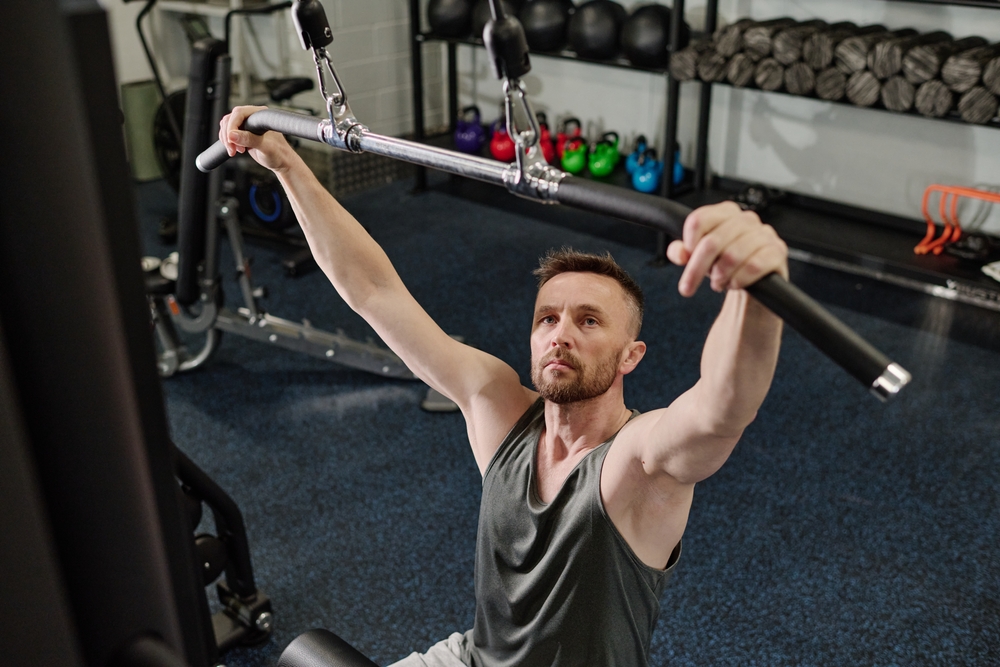
Train 4-5 times per week, but recovery management becomes non-negotiable at this volume.
You'll complete 5-6 supersets with 6-12 reps per exercise, varying rest periods from 60-120 seconds based on the load and complexity of each pairing.
Experienced lifters hit plateaus because your body adapts to familiar stimuli.
This protocol combines three advanced techniques to maximize muscle fiber recruitment and metabolic stress:
Pre-exhaustion means you fatigue a muscle with an isolation exercise before hitting it with a compound movement.
For instance, Superset 2 uses lateral raises to tire your shoulders, then immediately moves to overhead presses.
Your delts are already fatigued, forcing deeper muscle fiber recruitment during the compound lift.
Post-activation potentiation (PAP) flips the script—you perform an explosive movement before heavy lifting.
Superset 3 demonstrates this: depth jumps prime your nervous system, making your subsequent deadlifts feel more responsive.
The explosive movement activates high-threshold motor units that stay engaged for your heavy set.
Mechanical drop sets progress from harder variations to easier ones without changing weight.
Superset 6 exemplifies this—pancake push-ups are most difficult, dive bombers slightly easier, and diamonds easiest.
Your muscles work to complete failure across three movement patterns.
Superset 1: Compound Strength Foundation
- Barbell Bench Press (heavy): 5 sets x 6-8 reps
- Barbell Rows (heavy): 5 sets x 6-8 reps
- Rest 120 seconds
Superset 2: Pre-Exhaustion Shoulders
- Dumbbell L-Raises: 4 sets x 10-12 reps
- Dumbbell Overhead Press (same weight): 4 sets x 8-10 reps
- Rest 90 seconds
Superset 3: Explosive Lower Body with PAP
- Depth Jumps: 4 sets x 5 reps
- Heavy Deadlifts: 4 sets x 5-6 reps
- Rest 120 seconds
Superset 4: Back Specialization
- Straight-Arm Pushdowns: 4 sets x 12 reps
- Face Pulls: 4 sets x 15 reps
- Rest 60 seconds
Superset 5: Chest Hypertrophy
- Incline Dumbbell Press: 4 sets x 8-10 reps
- Cable Flyes or Dips: 4 sets x 10-12 reps
- Rest 60 seconds
Superset 6: Advanced Triceps Tri-Set
- Pancake Push-Ups: 3 sets to failure
- Dive Bomber Push-Ups: 3 sets to failure
- Diamond Push-Ups: 3 sets to failure
- Rest 90 seconds
This volume creates significant fatigue.
Watch for signs of overtraining—poor sleep quality, persistent soreness lasting beyond 48 hours, or decreased motivation to train.
If these appear, take an extra rest day or reduce sets temporarily.
Critical Implementation Guidelines for All Levels
Add approximately five pounds to your working weight when you can complete all prescribed reps with proper form for two consecutive workouts.
This simple rule keeps you progressing without outpacing your body's adaptation capacity.
Form always trumps weight.
Research shows that fatigue accumulation in supersets can compromise your technique, particularly on compound movements like squats, deadlifts, and bench presses.
If your form starts breaking down mid-set, drop the weight immediately.
You're building muscle through tension and control, not ego lifting.
Recovery needs scale with training intensity:
Beginners require a full 48 hours between sessions. Your nervous system and muscles need this time to adapt to the novel stimulus of superset training.
Intermediates recover faster—24 to 48 hours works well. You've built the work capacity to handle more frequent training, but don't push it if you're still sore from the previous session.
Advanced lifters must actively monitor recovery markers.
Poor sleep quality, soreness persisting beyond 48 hours, or decreased motivation to train all signal you're pushing too hard.
Take an extra rest day or reduce volume before these symptoms compound.
Set up your equipment before you start each superset.
Nothing kills the intensity faster than hunting for dumbbells or waiting for a bench mid-set.
Have both exercises ready to go, weights in position, and a clear path between stations if you're moving locations.
The minimal rest periods inherent to supersets keep your heart rate elevated throughout the workout.
You're getting concurrent cardiovascular conditioning on top of your strength work—this is why superset training works so well for fat loss alongside muscle building.
Start conservative with volume.
Beginners should limit themselves to 2-3 supersets per workout initially, even if you feel capable of more.
Intermediates can handle 4-5 supersets, while advanced lifters can program 5-6 with proper periodization.
Adding volume too quickly is how you end up overtrained and stalled out instead of progressing.
Making Superset Training Work for Your Goals
Start with the program that matches your current fitness level, not the one you aspire to reach.
Running the advanced protocol as a beginner won't accelerate your progress—it'll just burn you out and compromise your form.
Progress gradually, adding volume and intensity only after you've mastered the fundamentals at your current level.
Track every workout.
Write down the weights you used, reps you completed, and how each set felt.
This data is how you ensure progressive overload actually happens instead of just spinning your wheels with the same weights week after week.
If you hit all your prescribed reps with solid form for two consecutive sessions, you know it's time to add weight.
Your body gives you clear signals about recovery needs—listen to them.
Persistent soreness, disrupted sleep, or dreading your next workout all mean you need more rest.
Supersets create greater metabolic stress than traditional training, so recovery isn't optional.
Taking an extra day off will serve your long-term progress better than grinding through another session when your body isn't ready.
Equipment setup remains non-negotiable. The entire benefit of superset training depends on minimizing transition time between exercises.
If you're spending 30 seconds wandering around looking for dumbbells, you've essentially converted your superset back into traditional training with extended rest periods. Set everything up before you start.
Think of supersets as a long-term training strategy rather than a quick fix for getting results faster.
The method works because it's sustainable—you're cutting 25 minutes off your gym time while achieving the same muscle growth and strength gains as traditional approaches.
This time efficiency creates better work-life balance, making consistency easier over months and years.
Adjust the variables based on your individual response.
If 60-second rest periods leave you gasping and unable to maintain intensity on the second exercise, add 15-30 seconds.
If a particular exercise doesn't fit your body mechanics or available equipment, swap it for something similar.
The rep ranges and exercise selections in these programs provide a framework, but you can modify them to match your goals and how your body responds to the training stimulus.
Conclusion
You now have three complete superset programs tailored to your exact fitness level, each designed to cut your gym time by 25 minutes while delivering the same results as traditional training.
Pick the workout that matches where you are right now, set up your equipment before each superset, and track your progress religiously.
Start your next session with these protocols and experience how much more you can accomplish in less time.