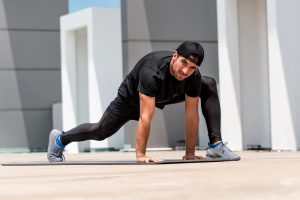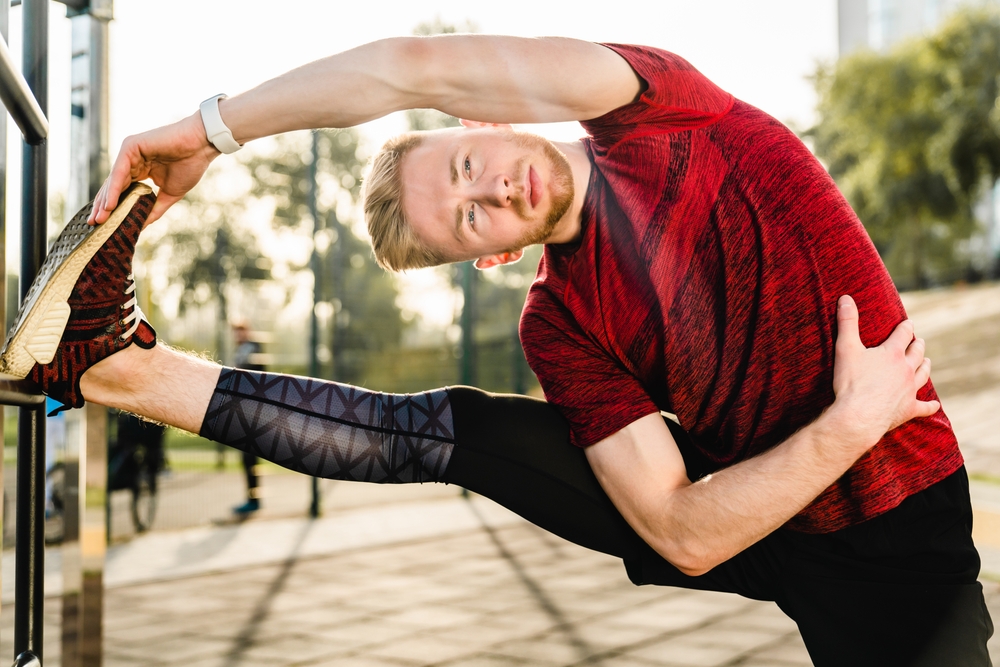
A complete full body stretching routine takes 10-15 minutes and targets all major muscle groups from your neck down to your calves, with each stretch held for 15-30 seconds while breathing deeply.
Keep reading for the exact step-by-step stretches you need to perform, proper breathing techniques that enhance effectiveness, and critical safety guidelines that prevent injury while maximizing flexibility gains.
Getting Started: Foundation and Breathing Technique
A full body stretching routine doesn't need to consume your day.
You can target all major muscle groups in just 10-15 minutes, but the timing of each individual stretch matters more than most people realize.
Research shows that holding static stretches for 15-30 seconds per muscle group produces real flexibility gains, while anything under 20 seconds delivers minimal results.
Think of it this way: your muscles need enough time under tension to actually adapt and lengthen.
Before you drop into your first stretch, though, you need to understand how breathing transforms the entire experience.
When you inhale, your diaphragm contracts downward and presses against your internal organs and blood vessels.
The moment you exhale, fresh blood rushes through your system, carrying oxygen to your muscles while flushing out lactic acid buildup.
This isn't just about relaxation—it's a mechanical process that directly improves muscle elasticity.
The breathing pattern works like this:
- Inhale slowly through your nose, letting your abdomen expand outward (your chest shouldn't be doing the work here)
- Hold that breath briefly at the top
- Exhale slowly through your nose or mouth as you sink deeper into the stretch
- Focus especially on exhaling during the most intense part of each position
Never hold your breath while stretching.
When you do, you create muscle tension that works against everything you're trying to accomplish.
Your body interprets breath-holding as a stress signal, and your muscles respond by tightening up rather than releasing.
One last foundation piece: warm muscles stretch more effectively than cold ones.
Spending 5-10 minutes on light activity like walking or gentle movement before you stretch makes your muscles more pliable and less prone to injury.
You can stretch without warming up, but you'll get better results and safer sessions if you take those few extra minutes to get your blood moving first.
Upper Body Stretches: Neck, Shoulders, and Chest
Your neck takes more abuse than you probably realize.
Hours of looking at screens push your head forward, creating tension that radiates down into your shoulders and upper back.
Starting your routine here releases that accumulated strain and sets the tone for everything that follows.
Neck Lateral Flexion addresses the sides of your neck.
Stand or sit with your shoulders relaxed—this detail matters because most people unconsciously raise their shoulders during neck stretches, which defeats the purpose.
Lower your right ear toward your right shoulder slowly until you feel a gentle stretch along the left side of your neck.
The key word is “gentle”—you're not trying to touch ear to shoulder.
Hold for 15-30 seconds, return to center, then repeat on the left side.
Three repetitions per side does the job.
For Neck Rotation, look straight ahead with your chin level.
Turn your head to the right until you feel a stretch in your neck and shoulder, hold for 15-30 seconds, return to center, then rotate left.
You can complete up to 10 sets of this movement.
Keep everything smooth and controlled rather than forcing the rotation deeper than your current range allows.
Chin Tucks might look silly, but they directly counteract that forward head posture from computer work.
Keep your head squarely over your shoulders and pull your head and chin backward slowly, as if you're creating a double chin.
Hold for 10 seconds and repeat 5-10 times.
This small movement retrains your neck muscles to support proper alignment.
Moving down into your shoulders, Shoulder Rolls release tension and improve mobility.
Stand with your feet shoulder-width apart and let your arms hang loosely.
Roll both shoulders forward in circular motions for 10 seconds, then reverse direction and roll backward for another 10 seconds.
Repeat this entire sequence 2-3 times.
The movement pumps fresh blood through the shoulder joints while loosening the muscles that bunch up from stress and poor posture.
The Cross-Body Shoulder Stretch targets your outer shoulder and upper back.
Extend your right arm straight across your chest at shoulder height.
Use your left hand to gently pull that right arm closer to your body.
You'll feel the stretch along your outer shoulder and into your upper back.
Hold for 20-30 seconds, switch sides, and repeat three times per side.
Your chest muscles also need attention, especially if you spend time hunched over a desk or steering wheel.
The Doorway Chest Stretch counteracts that rounded shoulder position.
Stand in a doorway and place both hands and forearms flat against the door frame at shoulder height, with your elbows bent at 90 degrees.
Step one foot forward until you feel a comfortable stretch across your chest and front shoulders.
Hold for 10-20 seconds and repeat three times.
This stretch opens up your chest and pulls your shoulders back into better alignment.
Finally, the Cat-Cow Stretch flows between two positions and connects your breathing directly to movement.
Get on your hands and knees with your shoulders directly above your wrists and your hips above your knees.
As you inhale, arch your back and lift your head and tailbone upward—this is cow pose.
As you exhale, round your spine while tucking your chin and pelvis inward—that's cat pose.
Flow between these two positions for 30 seconds, synchronizing each transition with your breath.
This dynamic movement mobilizes your entire spine while releasing tension through your shoulders and upper back.
Core and Back Stretches
Your spine moves in multiple directions throughout the day, but modern life tends to lock it into one position: slightly hunched forward.
These three stretches restore mobility across different planes of movement while releasing the tension that builds up from sitting, standing, or repetitive activities.
Trunk Rotation (Seated Spinal Twist) maintains spinal mobility and releases lower back tension through controlled rotation.
Sit sideways in a chair with your right side against the back.
Keep your legs completely stationary—all the movement happens in your torso.
Rotate to the right and reach for the chair back with both hands.
Here's where it gets interesting: use your arms to gradually deepen the stretch as your muscles loosen during the hold.
You'll feel your spine rotate further after a few seconds as everything releases.
Hold for 10 seconds and repeat three times per side.
Child's Pose releases your entire back chain from neck to lower back in one position.
Kneel with your toes pointed back and the tops of your feet flat on the ground.
Sit back toward your heels as you slide your arms forward, lowering your chest toward the floor.
Rest your forehead down and let your neck completely relax—there should be zero tension in your head and neck.
Hold this position for 30 seconds while breathing deeply.
The deep breathing matters here because each exhale allows you to sink a bit further into the stretch.
Rest for 10 seconds, then repeat three times.
Many people find this stretch deeply calming because it combines physical release with the relaxation response triggered by the forward fold position.
Standing Back Extension moves your spine in the opposite direction.
Stand near a stable surface for safety, with your feet hip-width apart.
Place your hands on your lower back with your fingertips pointing downward, meeting at your spine. Slowly bend backward at the waist as far as feels comfortable.
Your hands provide support while you keep your knees straight.
This counteracts all that forward bending and hunching your back does throughout the day.
Hold for 10-15 seconds and repeat 2-3 times.
The movement doesn't need to be dramatic—even a moderate backward bend relieves compression in your lower back and stretches the front of your torso.
Lower Body Stretches: Hips, Glutes, and Legs
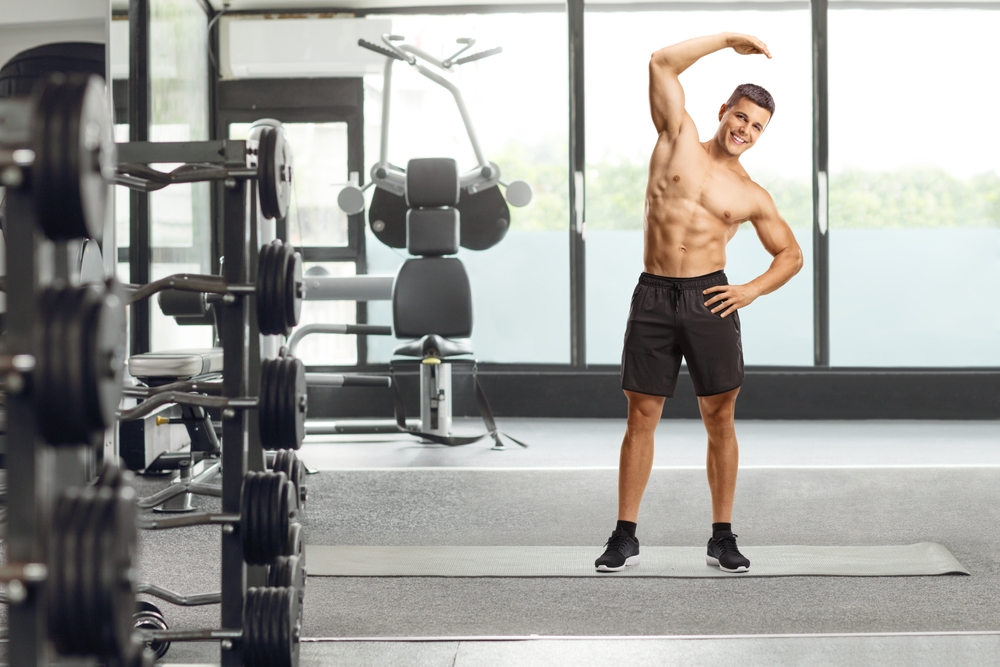
Your lower body carries you through the day, but sitting, standing, and walking all create tightness in different areas.
These stretches systematically address every major muscle group from your hips down to your ankles.
Hip Flexor Lunge Stretch is critical for counteracting sitting-related tightness.
Step your right foot forward into a lunge position with your left knee resting on a mat or towel.
Position your front knee directly over your ankle, then gently push your hips forward until you feel a stretch in the front of your left hip and thigh.
That pulling sensation runs through the hip flexors that shorten when you sit for extended periods.
Hold for 30 seconds per side.
Three stretches target your glutes and outer hips from different angles.
The Figure-Four Glute Stretch works while lying on your back with both knees bent and feet flat.
Cross your right ankle over your left thigh, just above the knee.
Reach through with both hands and grasp behind your left thigh, then gently pull your left knee toward your chest until you feel a stretch in your right glute and outer hip.
Hold for 30 seconds per side and repeat three times.
Pigeon Pose (Seated Version) hits similar areas with a different approach. Sit upright with your left leg bent so your shin runs roughly parallel to the front edge of your body.
Cross your right leg over and try to stack your shins if possible—though it's perfectly fine if your right knee points upward instead.
You'll feel the stretch in your outer right hip and glute.
Hold for 30 seconds, switch sides, and repeat three times per side.
The Knee-to-Chest Stretch releases lower back and hip tension simultaneously.
Lie flat on your back with both legs extended. Bend your left knee and place your hands just below the kneecap.
Gently pull that knee toward your chest while keeping your right leg straight on the floor.
Hold for 10 seconds, switch legs, and repeat the sequence five times.
Your hamstrings need attention from two positions.
The Standing Hamstring Stretch has you stand with your feet close together, then hinge forward at the waist.
Stick your buttocks back and shift your weight into your heels as you reach your hands toward the floor.
Don't force the stretch—keep a slight bend in your knees if you need to.
Hold for 30 seconds, breathing steadily and sinking deeper with each exhale.
The Lying Hamstring Stretch gives you more control and stability.
Lie on your back with both legs straight.
Loop a yoga strap, towel, or belt around one foot and slowly lift that leg straight toward the ceiling while keeping your spine neutral on the floor.
Once you feel a gentle stretch down the back of your leg, hold for 30-60 seconds.
Breathe naturally and repeat on the other side.
This version works well if you have balance issues or want to isolate one hamstring at a time.
Standing Quadriceps Stretch addresses the front of your thighs.
Stand near a wall if you need support.
Bend your right knee and bring your heel toward your buttocks.
Grasp your right ankle with your right hand and pull gently.
Keep your knees together and avoid arching your lower back—that's a common mistake that shifts the stretch away from your quads.
Hold for 30 seconds per leg. For better balance, press your standing foot firmly into the ground and engage your core.
Your calves contain two major muscles that need separate attention.
The Calf Stretch (Wall) targets the gastrocnemius muscle.
Stand facing a wall with your hands pressed against it at shoulder height.
Step your right foot back 2-3 feet, keeping it straight with the heel flat on the ground.
Bend your front knee slightly while keeping your back leg straight, then lean toward the wall until you feel a stretch in your right calf.
Hold for 30 seconds per side.
The Soleus Calf Stretch uses the same wall position but with a key difference: bend both knees slightly while keeping your back heel on the ground.
This targets the deeper soleus muscle that sits underneath the gastrocnemius.
Hold for 30 seconds per side.
Both calf stretches matter because these muscles work together to push you forward with every step you take.
Critical Safety Guidelines and Best Practices
Understanding what not to do matters just as much as knowing the proper techniques.
A few common mistakes can actually set back your flexibility progress or lead to injury.
Never bounce during stretches.
This might seem like an efficient way to push deeper into a position, but bouncing creates small muscle tears that form scar tissue as they heal.
That scar tissue makes your muscles tighter over time—the exact opposite of what you're trying to achieve.
Move smoothly into each position and hold steady instead.
Pain is your body's red flag.
Stretching should produce a gentle pulling sensation or mild discomfort, never sharp pain.
If you feel pain in your joints or tendons—such as your Achilles tendon during a calf stretch—stop that stretch immediately.
The difference between productive discomfort and harmful pain becomes clearer with practice, but when in doubt, back off.
You can always gradually work deeper into a stretch over multiple sessions.
Stretch both sides equally, even when one side feels significantly tighter than the other.
Flexibility imbalances between your left and right sides increase your injury risk because your body compensates for the tight side in ways that create strain elsewhere.
Always perform each stretch on both sides, giving equal time and attention to each.
Progress happens gradually over weeks and months, not overnight.
You won't see dramatic changes immediately, and that's completely normal.
Research shows subtle improvements typically appear within 2-3 weeks of consistent practice, while more significant flexibility gains emerge after months of regular stretching.
This timeline helps you set realistic expectations and stick with the routine long enough to see results.
Optimal timing breaks down like this:
- Hold each stretch for 15-30 seconds—research confirms this range produces the best flexibility gains
- Anything under 15-20 seconds shows minimal effectiveness
- Holds exceeding 60 seconds offer diminishing returns for the time you invest
- Perform 1-3 repetitions per stretch depending on your flexibility needs and how much time you have available
The sweet spot for most people is holding each stretch for 20-30 seconds and repeating 2-3 times per side.
This approach balances effectiveness with efficiency, letting you complete the full routine in 10-15 minutes while still achieving meaningful results.
When to Stretch, Modifications, and What to Expect
Timing your stretching routine strategically amplifies its benefits.
Daily practice yields the best results, and most experts recommend stretching at least once per day.
Many people choose morning sessions to prepare their bodies for the day ahead, while others prefer evening stretching to release accumulated tension.
If time is tight, you can split the routine—upper body in the morning and lower body in the evening—without sacrificing effectiveness.
Post-workout timing deserves special attention.
Static stretching after exercise helps your muscles recover evenly and maintains their length, preventing the tightness that often follows intense activity.
Since the routine takes just 10-15 minutes, it's practical to incorporate after any workout as part of your cool-down.
If you sit extensively for work, performing selected stretches every 90 minutes prevents muscle tightness from developing in the first place.
Focus particularly on your neck, shoulders, hip flexors, and hamstrings—these areas accumulate the most tension from prolonged sitting and respond well to brief stretching breaks throughout the day.
Tailoring the routine to your situation:
Older adults should hold each stretch for 45 seconds instead of 30.
Research shows that older individuals need longer hold times to achieve similar flexibility gains as younger people.
Move more slowly between positions to accommodate joints that may need extra time to adjust.
Desk workers benefit most from emphasizing neck, shoulder, upper back, hip flexor, and hamstring stretches.
These areas bear the brunt of prolonged sitting and respond dramatically to consistent stretching.
Athletes should include this routine post-workout as part of their cool-down.
Consider adding sport-specific stretches based on which muscles your activity primarily uses—runners might add extra hamstring and calf work, while swimmers might focus more on shoulders and chest.
Consistent practice produces multiple measurable benefits.
You'll experience decreased injury risk through improved muscle and joint flexibility, along with enhanced athletic performance as reducing joint restrictions allows you to move more efficiently.
Your posture improves as lengthening tight muscles prevents them from pulling your body out of alignment.
Better circulation and reduced muscle soreness follow naturally, while increased range of motion in all major joints makes daily activities easier.
The mental benefits run deeper than you might expect.
Proper breathing during static stretching activates your parasympathetic nervous system, which promotes rest and relaxation—the opposite of your stress response.
Many practitioners report that evening stretching significantly improves their sleep quality and helps them decompress from daily stress.
This isn't just subjective experience; it's a physiological response to the breathing patterns and sustained holds that characterize static stretching.
Regular stretching also prevents age-related mobility loss.
The flexibility you maintain now directly impacts how easily you'll move in future decades.
For maximum effectiveness, complete the full routine 5-7 days per week.
Even practicing 3-4 times weekly yields substantial improvements, though.
Here's the real insight: consistency matters far more than intensity.
A regular 10-minute practice beats occasional 30-minute sessions because your muscles respond better to frequent, moderate stretching than sporadic intense efforts.
Your body adapts to what you do regularly, not what you do occasionally.
Conclusion
This 10-15 minute routine gives you everything you need to maintain flexibility across your entire body.
Start with the stretches that address your tightest areas, master the breathing technique, and build up to the full sequence over your first week.
You'll notice the difference within a few weeks if you show up consistently—and your body will thank you for years to come.