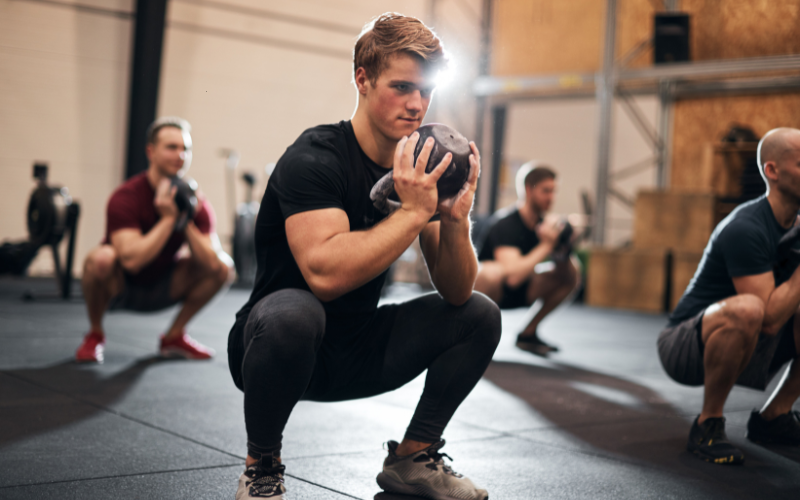
The goblet squat is a front-loaded squat where you hold a dumbbell or kettlebell against your chest, invented by strength coach Dan John back in 2002 as a simple, self-correcting way to teach beginners proper squat mechanics.
Keep reading to learn exactly how to perform it, what muscles it targets, and how to fit it into your training.
What Is the Goblet Squat and Where Did It Come From?
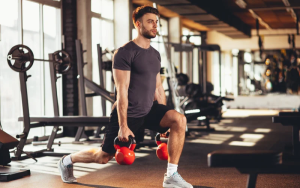
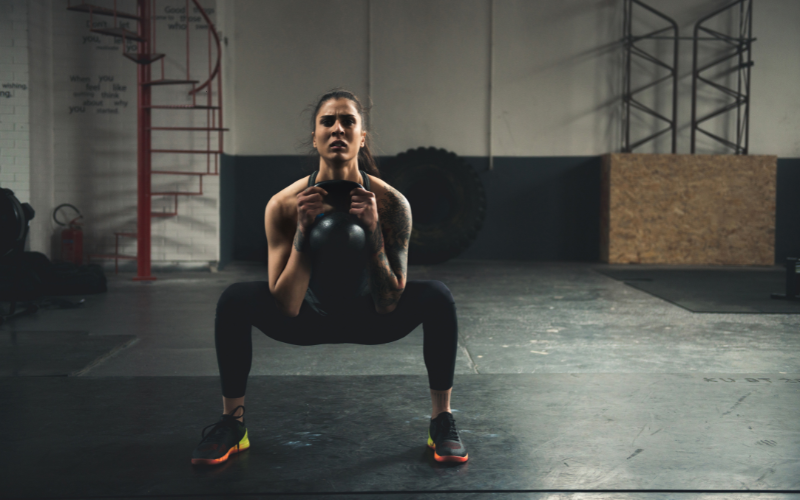
At its core, the goblet squat is simple: you hold a dumbbell, kettlebell, or plate vertically against your chest and squat down while keeping that weight glued to your sternum.
That front-loaded position is what sets it apart from a barbell back squat, and it's also what makes the whole movement so easy to learn.
The exercise has a clear origin story. Strength coach Dan John invented it in 2002, and he's been upfront about how it came together. He was trying to teach 400 athletes how to squat correctly and kept failing.
Looking for something that would just click, he experimented with the Zercher squat and the “potato sack” squat, and the goblet squat landed somewhere in between the two.
The name comes from how you hold the weight, cupped against your chest like a knight cradling the Holy Grail, a nod to John's fascination with Arthurian legend.
It's a fitting name too, since the position it forces you into is exactly why the exercise works so well as a teaching tool.
Holding weight out in front of your body acts as a natural counterbalance. Lean too far forward or round your back, and the weight starts pulling you out of position immediately, so you get instant feedback without needing a coach to correct you.
That built-in self-correction is what makes it such a popular entry point for anyone learning to squat, whether they're brand new to lifting or coming back from injury.
Compared to most staple lifts, the goblet squat is a fairly recent invention. Most foundational strength exercises trace back decades or longer, but this one emerged in the early 2000s and has already become a standard part of coaching programs everywhere.
How to Perform a Goblet Squat with Proper Form
Setup
Stand with your feet roughly shoulder-width apart, toes turned out somewhere between 10 and 30 degrees. Not sure what that looks like on your body?
Try Dan John's trick: do three quick vertical jumps and look down at where you land. That natural stance is usually right where your feet should be for a goblet squat.
Grab your dumbbell or kettlebell and hold it vertically against your chest, right at chin height. Tuck your elbows in toward your ribs, pull your shoulder blades back, and brace your core before you move.
The descent and ascent
- Bend at the hips and knees at the same time, sitting back and down like you're lowering into a low chair.
- Keep your torso upright and the weight pinned to your chest the entire way down.
- Push your knees out so they track over your toes, letting your elbows slide down along the inside of your knees as you approach the bottom.
- Drive back up through your mid-foot and heels, pushing the floor away as you extend your hips and knees together.
- Squeeze your glutes hard at the top to finish the rep.
Breathing
For lighter, higher-rep sets, just breathe naturally, inhaling on the way down and exhaling on the way up.
When the load gets heavier, take a big belly breath at the top, brace like you're about to get punched, and hold that breath through the hardest part of the ascent before exhaling near the top.
This raises your blood pressure briefly, so go easy on this technique if you're older or have any cardiovascular concerns.
Muscles Worked and Why It's a Full-Body Movement
Your quads and glutes do most of the work here. The quads control the descent and drive knee extension on the way up, and the upright torso position keeps them heavily engaged throughout.
Your glutes take over as you extend your hips out of the bottom position, and the deeper you squat, the more they get recruited.
A handful of muscles pitch in as secondary movers, including your adductors, hamstrings, and calves.
Your adductors in particular do more work here than you might expect, especially if you're squatting deep, since they act as hip extensors at the bottom of the movement.
What really sets the goblet squat apart, though, is everything happening isometrically while your legs do the moving.
Your core, including your abs and obliques, has to brace hard against the front-loaded weight just to keep your torso from folding forward.
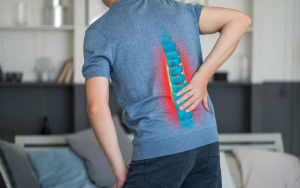
Your lower back muscles work to maintain a neutral spine, while your upper back, shoulders, and biceps contract the entire time just to hold the weight in place against your chest.
That's the real reason coaches call this a full-body lift dressed up as a leg exercise. Your legs are moving, but your entire upper body is working just as hard to keep everything locked in place.
Benefits, Common Mistakes, and Who Should Do Goblet Squats
Why it's worth doing
The goblet squat earns its popularity for a reason. It teaches proper squat mechanics almost automatically, since the counterbalance forces you into good positioning without much conscious effort.
It also opens up mobility you might not access in an unloaded squat, letting you sit deeper into the movement while building genuine core stability from all that anti-flexion bracing.
Compared to a barbell back squat, it's noticeably easier on your lower back since the load sits in front rather than compressing your spine from above.
Add in the fact that it only requires one weight and no rack, and you've got an exercise that works just as well at home as it does in a gym. Many lifters also use it as a warm-up or primer before heavier barbell work.
Dan John offers a useful benchmark here: if you can do one clean goblet squat with a 24 kg kettlebell, your lower body is probably strong and mobile enough for the demands of daily life. Hit 10 reps at that weight, and you're in strong shape.
Mistakes that undercut your results
- Knees caving inward — actively drive them out over your toes
- Weight drifting away from your chest — keep elbows pinned to your ribs
- Elbows dropping to your sides — drive them forward and under the weight
- Lower back rounding — reduce depth or load until your spine stays neutral
- Heels lifting off the ground — sit back into your heels
- Leaning too far forward — initiate by sitting your hips back first
- Cutting depth short — usually a sign you're using too much weight
- Rushing through reps — slow down, especially on the way down
Who gets the most out of it
This exercise is especially valuable for beginners learning to squat for the first time, athletes using it as a movement-quality primer, and anyone returning to training after injury.
It's also a strong fit for older adults working on functional strength, home trainees without access to a rack, and anyone dealing with lower-back concerns who needs a gentler loading option.
Goblet Squat vs. Front Squat vs. Back Squat vs. Bodyweight Squat
The air squat is where everyone should start. It's the prerequisite pattern for every squat variation that follows, so get comfortable with roughly 20 clean bodyweight reps before you add any load at all.
Once you're ready to load up, the goblet squat and front squat share a lot in common. Both position the weight in front of your body and demand an upright torso, but they differ in how much you can actually lift.
A front squat rests the barbell across your shoulders, letting your skeleton support far more weight than your arms ever could holding a dumbbell or kettlebell.
That's why the goblet squat works so well as the low-skill entry point, and the front squat becomes the natural next step once you've built a solid foundation.
The back squat sits at the other end of the spectrum. With the barbell across your upper back, you can typically load 2 to 5 times more weight than you can in a goblet squat, making it the better choice for building maximal strength.
That extra capacity comes at a cost, though. It demands more technical skill and places significantly more compressive load on your spine.
None of these variations are competing with each other. Goblet squats win on accessibility, teaching value, and being gentle on your back, while barbell squats win when your goal is moving serious weight. Most well-built programs use them together rather than picking one over the rest.
Programming, Equipment, and Progressions
Where it fits in your workout
Place goblet squats first or second in a lower-body session while you're still fresh, especially if you're using them to build strength or size.
If your real goal is barbell squatting, use them instead as a warm-up primer, running through 2 to 3 light sets before you load the bar.
Rep ranges depend on your goal
- Skill work: light load, focus entirely on form
- Hypertrophy: 8-15 reps per set
- Strength: 5-8 reps per set with heavier load
- Warm-up: light sets to prime the pattern
- Conditioning: higher reps for endurance work
Loading by experience level
Beginners should start around 5-12 kg, intermediates can move into the 15-25 kg range, and advanced lifters often push past 24 kg. There's a natural ceiling here, though.
Once you're holding somewhere around 35-40 kg, your grip and upper back give out before your legs get properly challenged. That's your cue to graduate to a landmine squat, front squat, or back squat instead.
Choosing your equipment
- Dumbbell: most accessible, secure grip, best for beginners
- Kettlebell: lower center of gravity, often allows deeper range and better core engagement once you're past beginner loads
- Plate: workable if it has handles, uncomfortable without them
- Household objects: useful substitute for home training or rehab work
A kettlebell tends to edge out on form quality as the weight increases, but a dumbbell wins on sheer accessibility. Use whichever one you'll actually stick with.
Scaling the movement
To make it harder, try adding tempo, pausing at the bottom, or moving to a single-leg variation. To make it easier, regress to a box squat or a supported squat where you hold onto something stable as you lower down.
Conclusion
The goblet squat remains one of the most practical, low-risk ways to build loaded squatting into your routine, whether you're just starting out or years into training.
Focus on mastering your form before chasing heavier weight, and don't retire it once you've moved on to barbell work. It's a tool worth keeping around for good.