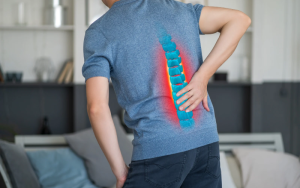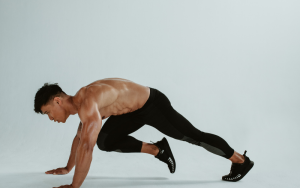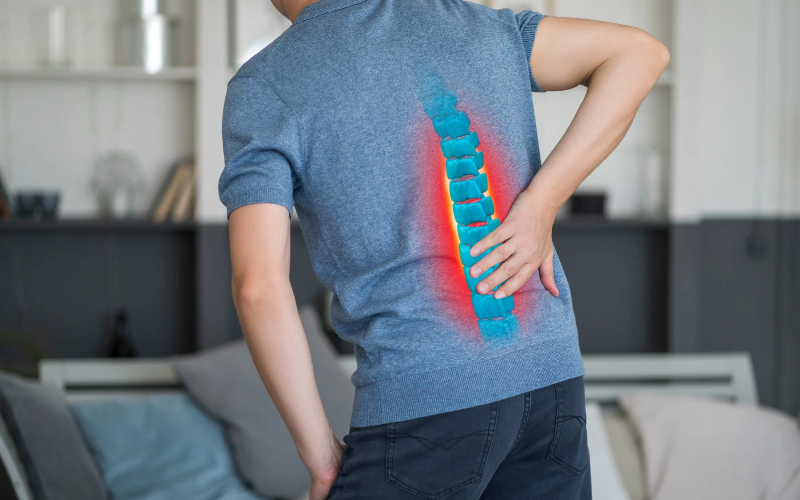
Sciatica can turn simple things like sitting, driving, or sleeping into a struggle, and stretching is one of the first things people try for relief. So which stretches are worth your time?
The knee-to-chest, figure-four, supine hamstring, cat-cow, and prone press-up are the five that ease symptoms and keep you moving for most people, though they’re not a cure, so keep reading for a more detailed explanation of how to do each one and which ones suit you.
What Stretching Can and Can’t Do for Sciatica
Stretching helps you manage symptoms, but it won’t fix a herniated disc or a narrowed spinal canal. Think of it as a way to stay comfortable and mobile while your body recovers.
The research on stretching for sciatica specifically is limited and low in quality:
- A 2022 analysis of 18 trials with 2,699 participants found inadequate evidence that physiotherapy beats other treatments.
- A 2015 analysis found a small short-term benefit for leg pain from structured exercise compared with simply staying active, about 11 points on a 0-100 scale. Over the long term, there was no difference.
The picture looks better for low back pain in general. A 2021 review of 249 trials found that exercise cut chronic low back pain by about 15 points on a 0-100 scale compared with no treatment or usual care.
Stretching on its own is less convincing, though. In a 2025 analysis of 35 trials, Pilates, yoga, and walking reduced pain, while stretching alone showed no clear effect.
That points to staying active as the real foundation. Gentle movement, even when it’s uncomfortable, isn’t harmful and can speed up recovery, while long stretches of sitting or lying down can slow it.
So treat the five stretches in this guide as a menu rather than a routine to complete in full. Keep the ones that ease your leg pain, and drop any that make it worse.
Get the Basics Right Before You Stretch
Sciatica isn’t one condition, so the stretch that helps one person can aggravate another. It depends on what’s causing your symptoms:
- Herniated disc: This is the most common cause, and forward-bending stretches can flare it up.
- Spinal stenosis or spondylolisthesis: Both become more common after 60, and backward-bending stretches often aggravate them.
- Piriformis syndrome: A deep buttock muscle irritates the nerve. This affects a smaller group of people.
Find Your Direction of Preference
Your direction of preference is the movement that pulls leg pain back toward your spine. Pay attention to where the pain goes as you try each stretch:
- Good sign: Leg pain retreats toward your low back, a shift known as centralization. Your back pain may rise briefly, and that’s fine.
- Bad sign: Pain travels further down your leg, or new numbness or tingling shows up. Stop the stretch.
Prepare Your Body
A short walk, a warm shower, or about 20 minutes of heat makes stretching more comfortable. Some people also find ice helpful during the first week, with heat taking over afterward.
Once you start, move slowly and breathe steadily. Don’t bounce, and don’t push past your comfortable range. A mild pulling sensation is normal, but sharp, burning, or spreading pain means you should stop.
Until the pain settles, hold off on heavy lifting and sharp twisting, which includes golf, tennis, and some yoga poses.
If you’re pregnant, recently gave birth, had surgery recently, or had a heart attack, check with a professional before you start. The same goes if you’re unsure whether these exercises suit you.
Three Floor Stretches for Your Hips, Buttocks, and Hamstrings
These three stretches all start on your back, so you can do them back to back on a mat or a firm bed.
Stretch 1: Knee-to-Chest (Single and Double)
This one works the low back, glutes, and upper thigh.
- Lie on your back with your knees bent.
- Pull one knee toward your chest and gently press your low back into the floor.
- Switch legs, then bring both knees up together.
Recommended doses vary. Holds range from 5 to 30 seconds, for 2 to 10 repetitions, once or twice a day. If your knees are sensitive, hold behind the thigh instead of over the kneecap. To make it easier, keep the other foot flat on the floor. To make it harder, keep the resting leg straight.
This is a forward-bending move, so it can push symptoms further down your leg if a disc is the cause. It often feels better with stenosis.
Stretch 2: Figure-Four (Supine Piriformis)
This stretch targets the piriformis and the other deep hip rotators. The sciatic nerve runs beneath the piriformis, which is why tightness there can matter.
- Lie on your back with your knees bent.
- Cross the ankle of your affected leg over the opposite knee.
- Pull the thigh of the leg still on the floor toward your chest until you feel a stretch in your buttock.
A common dose is 30 seconds, three times per side, twice a day. You’ll also see shorter holds of 10 to 30 seconds, or 5 to 10 breaths.
If you sit a lot, try the seated version with the same dose. Other options include a knee-to-opposite-shoulder variation or simply letting the crossed knee fall outward. Stop if you feel pinching at the front of your hip or in your back.
Stretch 3: Supine Hamstring (Towel)
Tight hamstrings add load to your low back, and this stretch eases them.
- Lie on your back and lift one leg.
- Loop a towel around the ball of that foot.
- Straighten the leg until you feel a stretch behind your thigh.
Start with 5 to 10 seconds and build up to 30 seconds, at least three times per leg. If your back feels uncomfortable, bend the resting leg. You can also do a wall version in a doorway, or sit tall on the edge of a chair with one heel out in front of you.
You should feel a muscle stretch behind the thigh. Burning, tingling, or shooting pain into your calf or foot means you’re tensioning the nerve instead, so ease off. A 2024 analysis found that hamstring stretching lowered low back pain scores, though results varied widely.
Two Movements for Spine Mobility and Disc-Related Leg Pain
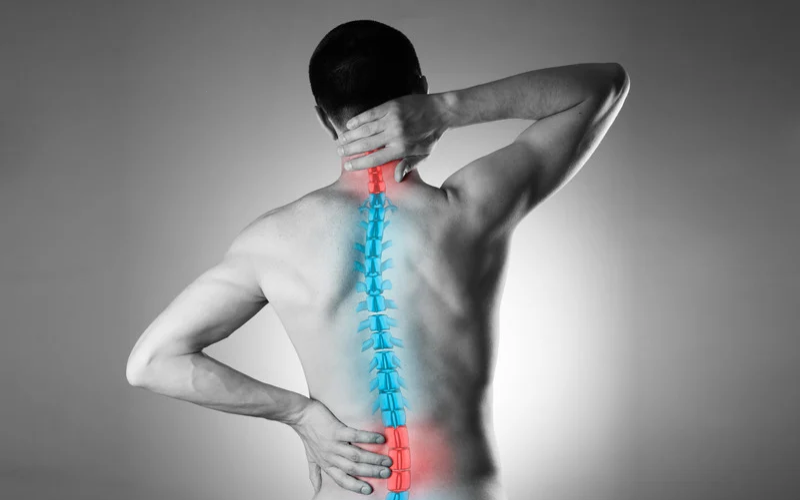
These two moves work differently from the floor stretches above. One mobilizes your spine through gentle motion, and the other aims to pull leg pain back toward your low back.
Stretch 4: Cat-Cow
Cat-cow improves mobility in the lower and upper spine. It’s a flowing movement rather than a sustained hold.
- Start on all fours.
- Exhale and round your back, tucking your chin and tailbone.
- Inhale and let your belly sink, lifting your head and tailbone.
- Return to neutral.
Move with your breath. Typical doses include 3 to 5 repetitions twice a day, 10 repetitions during a flare, or 30 seconds of continuous movement for 3 to 5 sets. Keep both phases small. If arching hurts, which is common with stenosis, skip that half. If rounding hurts, which is common with a herniated disc, skip that one instead. A folded towel under your knees helps if kneeling is uncomfortable, and you can also do the movement seated in a chair.
Stretch 5: Prone Press-Up (McKenzie Extension)
This is the stretch most aimed at disc-related sciatica. The goal is to centralize your pain, moving it out of the leg and back toward the low back.
- Lie face down for a few minutes.
- Prop yourself up on your elbows.
- Place your hands under your shoulders and press up, keeping your hips and legs relaxed.
Hold for 5 seconds at first, then work up to 30 seconds, aiming for 10 repetitions. Move to the next stage only when the earlier one feels comfortable.
Stop if leg pain spreads, or if standing or bending backward is what typically provokes your symptoms, since extension can aggravate stenosis and spondylolisthesis. Research on the McKenzie approach is among the more favorable for back pain, though it’s still imperfect.
Bonus: Seated Sciatic Nerve Slider
If the hamstring stretch brings on nerve symptoms, this is a good swap. Sit on a chair, straighten your knee, and point your toes while looking up. Then lower your foot while tucking your chin. Move slowly, and you shouldn’t feel pain at any point. Therapists use this move to improve short-term pain and function.
Build a Simple Routine and Track Your Progress
You don’t need to do all five stretches. A short routine built around what your body tolerates works better than a long one you can’t finish.
Start Small and Adjust
Begin with the two lowest-risk options: the figure-four and a gentle knee-to-chest. Then test your direction of preference:
- If knee-to-chest sends pain down your leg: Switch to the press-up progression.
- If extension makes things worse: Favor knee-to-chest and cat-cow.
Once the acute pain settles, add the towel hamstring stretch. Build from 10 seconds up to 30, three times per leg.
Pair Stretching With Movement
Walking and general activity are where the strongest evidence sits, so treat them as part of your routine rather than an add-on.
Early on, gentle movement matters more than a formal program, since acute flares tend to follow a favorable natural course. If symptoms last beyond a few weeks, consider a structured Pilates or McKenzie-style program.
Check In at 4 to 6 Weeks
Most sciatica improves within weeks to a few months. If you aren’t clearly better after 4 to 6 weeks, get evaluated.
Keep in mind that recommended holds range from 5 to 30 seconds, and no trial has found an optimal dose. Adjust to what feels comfortable rather than chasing a number.
Warning Signs: When to Stop Stretching and Get Help
Most sciatica is uncomfortable but not dangerous. A few symptoms, though, point to a serious problem that stretching can’t help.
Go to Emergency Care Right Away If You Have
- Sciatica in both legs, or severe or worsening weakness or numbness in both legs
- Numbness around your genitals or anus, often called “saddle” numbness
- New trouble urinating, loss of bladder control, or loss of bowel control
- Sudden numbness or weakness in a leg
- Pain after a violent injury, such as a car accident or fall
These can signal cauda equina syndrome, which needs hospital treatment quickly. Don’t drive yourself to the emergency department.
Book a Routine Appointment If
- Your pain hasn’t improved after a few weeks of home care, or it’s severe or getting worse
- Pain keeps you from your normal activities
- Back or leg pain comes with fever, chills, night sweats, or unintended weight loss
- A particular stretch consistently makes your leg symptoms worse
For that last one, a physical therapist can find your direction of preference and tailor a plan to you.
Conclusion
Sciatica stretches work best as a flexible menu, not a fixed routine. Keep the ones that ease your leg pain, drop the ones that make it worse, and stay active while your body recovers. Walking and gentle daily movement will do more for you than any single stretch.
This guide isn’t a substitute for an individual medical assessment. If your symptoms persist, worsen, or match any of the warning signs above, talk to a doctor or physical therapist who can look at your specific situation.