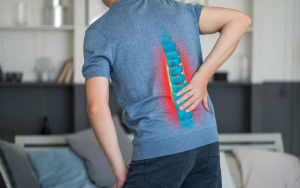
Icing sore muscles feels like the obvious move after a tough workout, but does it actually speed up your recovery?
Short answer: no — ice numbs the pain and calms swelling for a bit, but it doesn't help your muscles repair any faster, and if you're strength training regularly, it might even slow down your gains.
Keep reading to see exactly what's happening in your muscles when you ice them, and when reaching for that ice pack actually makes sense.
What Actually Happens When You Ice a Sore Muscle
When you press an ice pack against a sore muscle, your body kicks off a chain reaction, and understanding it explains both why ice feels good and why it has limits.
Cold triggers a reflex that narrows your blood vessels, cutting down blood flow to the area. This reduces swelling and slows the delivery of inflammatory compounds to the tissue.
At the same time, the drop in temperature lowers the metabolic rate of the cooled cells, which in theory helps protect nearby tissue from further damage when there's been trauma.
The pain relief you feel comes down to your nerves. Cold slows nerve conduction velocity, meaning pain signals travel to your brain more slowly and weakly.
One controlled study on the tibial nerve found conduction speed dropped by a cumulative 32.8% when skin was cooled to 10°C, and typical cryotherapy can reduce nerve conduction by up to 30%.
On top of that, cold activates what's called the gate control mechanism: the non-painful sensation of cold competes with pain signals and partially blocks them from registering. Muscle spasms ease up too, adding another layer of relief.
None of this lasts forever. Once you remove the ice, or if you leave it on too long, your body reverses course and floods the area with blood through reactive vasodilation.
This is your body's way of protecting the tissue from cold, but it also means the numbing effect is temporary by design.
Here's the piece that changes how you should think about icing: every mechanism above works by dialing down your body's natural inflammatory response.
That response feels unpleasant, but it's the biological machinery your body uses to clear damaged cells and start rebuilding.
Ice doesn't reach back in time and undo the damage your muscles already sustained during exercise — it just changes how your body responds to that damage in the hours afterward. Pain relief and healing are two different things, and ice only reliably delivers one of them.
Does Icing Actually Relieve Soreness? What the Research Shows
So does ice actually work for muscle soreness, or is it mostly a placebo with a chilly sensation attached? The research says it does help, but the effect is smaller and more limited than most people assume.
A major review of cold water immersion trials found some real evidence that it reduces delayed onset muscle soreness (DOMS) compared to just resting or doing nothing at all.
That's the good news. But when researchers zoomed out and compared cold against other recovery methods, cold didn't come out on top.
A 2022 analysis pulling together 59 studies and over 1,300 patients ranked ten different recovery methods for pain relief in the 24 hours after exercise. Hot packs won, by a wide margin.
Cold packs and ice massage landed near the bottom of the list. If your only goal is dulling next-day soreness, reaching for a heating pad may actually serve you better than a bag of ice.
Timing matters more than most people realize. A separate analysis of 32 randomized trials involving nearly 1,100 patients found that cold applied within an hour of exercise measurably reduces pain in the first 24 hours afterward.
Past that 24-hour window, the effect disappears. Icing your quads two days after leg day isn't doing much of anything.
For those who want a specific protocol, a 2025 analysis of 55 trials offers concrete numbers:
- For reducing perceived soreness: 10–15 minutes of cold water immersion at 11–15°C performed best.
- For biochemical markers of muscle damage and neuromuscular recovery (like jump performance): 10–15 minutes at a colder 5–10°C worked better.
These aren't dramatically different protocols, but the temperature split shows that “colder is better” isn't universally true — it depends on what outcome you're targeting.
Here's the distinction that trips people up: feeling less sore is not the same as recovering faster. Multiple trials show cold water immersion and sports massage reduce how sore you feel without improving your actual strength, power output, or range of motion.
You might report less pain on a questionnaire while your muscles are just as functionally impaired as someone who didn't ice at all.
And before you assume more intense icing gets better results, one trial tested this directly — adjusting the duration, water temperature, and overall dosage of post-exercise water immersion — and found it made minimal difference to DOMS outcomes. Cranking up the cold or extending the session doesn't buy you much.
The takeaway: ice can shave some edge off soreness in the first day, especially if applied soon after exercise, but it won't restore function any faster and heat may outperform it for pain relief anyway.
The Trade-Off Nobody Talks About — Icing and Muscle Growth
If you're strength training with the goal of getting bigger or stronger, the ice bath habit deserves a second look.
The most compelling evidence against routine icing isn't about pain or comfort at all — it's about what cold does to your muscles over time.
A trial that ran for 12 straight weeks put this to the test directly. Participants did strength training, then followed each session with either cold water immersion or active recovery.
By the end, the active recovery group built significantly more strength and muscle mass than the group that iced. The cold wasn't neutral — it appears to have gotten in the way of the adaptations training was supposed to produce.
The mechanism behind this comes down to what happens at the cellular level. Routine post-exercise cold immersion dampens the activity of satellite cells, the cells muscle tissue relies on to repair and grow after being stressed by training.
It also blunts anabolic signaling, the biochemical messaging that tells your body to build new muscle protein. Without that signaling firing at full strength, your muscles have less reason to adapt.
This shows up in protein synthesis too. In a separate study, one leg was immersed in cold water after exercise while the other went into warm water.
The cold leg synthesized less muscle protein and absorbed fewer amino acids from protein you'd eaten, compared to the warm leg. Same person, same workout, same meal — different result, based purely on temperature.
A 2024 meta-analysis pulled these threads together and confirmed the pattern holds across multiple studies: cold water immersion right after resistance training measurably reduces the hypertrophy (muscle growth) you'd otherwise get from that training.
One important nuance: this trade-off isn't universal across all types of training.
- Strength and hypertrophy adaptations — clearly suppressed by regular post-exercise cold immersion.
- Endurance and aerobic adaptations — largely untouched by the same cold exposure.
So the practical takeaway depends entirely on what you're training for. If your priority is building size or strength, making cold water immersion or ice baths a routine part of your post-lift recovery works against your own goals.
If you're training primarily for endurance, this particular concern doesn't apply nearly as much.
Icing an Actual Injury vs. Everyday Muscle Soreness
Not all muscle pain is the same, and lumping ordinary soreness together with a real injury leads to bad decisions. The evidence supports treating these two situations very differently.
Everyday muscle soreness, the kind you get a day or two after a hard workout, is mild and self-limiting by nature. It typically peaks somewhere between 24 and 72 hours after exercise, then fades on its own within five to seven days.
There's no structural damage requiring intervention here. Icing in this scenario is entirely optional, purely for comfort, and won't change how quickly you recover.
A real muscle injury, like a strain or tear, is a different story, and this is where the research gets more interesting.
A mouse study looked at what happens when you ice a severe eccentric-contraction injury, the kind that causes substantial muscle damage.
The icing delayed the arrival of macrophages, the immune cells responsible for clearing out damaged, necrotic muscle fibers.
With that cleanup process slowed down, the muscle ended up with more small, incompletely regenerated fibers two weeks later. In other words, icing a severe injury appeared to interfere with the repair process itself.
But the same research group found the opposite result with mild injuries. When less than 10% of muscle fibers were necrotic, icing actually helped by limiting excessive inflammatory invasion and supporting regeneration. Severity, it turns out, flips the equation entirely.
Worth noting: no one has run a direct human trial testing whether icing delays healing of an actual torn muscle. Inducing that kind of injury in people isn't ethical, so this specific finding comes from animal models.
What we do have in humans is evidence that cold impairs adaptation and protein synthesis, which is related to healing but isn't quite the same thing as watching a tear knit back together.
This evidence has driven a real shift in how clinicians approach acute soft-tissue injuries. The old RICE protocol (Rest, Ice, Compression, Elevation) has been largely replaced by a newer framework called PEACE & LOVE:
Immediately after injury (PEACE):
- Protect the area from further damage
- Elevate the injured limb
- Avoid anti-inflammatory treatments
- Compress to limit swelling
- Educate yourself on realistic recovery expectations
In the days that follow (LOVE):
- Load the area gradually as pain allows
- Optimism — your mindset affects recovery outcomes
- Vascularization through movement and blood flow
- Exercise to restore mobility and strength
Notice that “avoid anti-inflammatories” is built directly into the first phase. This includes routine icing, because inflammation is now understood as a necessary part of healing rather than a problem to suppress.
Ice still has a place for short-term pain relief on a real injury, but it's no longer treated as a healing tool. Any severe injury should get checked out by a professional before you manage it yourself.
How to Ice Safely (If You Choose To)
If you've decided icing makes sense for your situation, doing it correctly matters just as much as deciding to do it at all. Here's how the main methods stack up.
Ice packs and gel packs are the most practical option for targeting a specific sore spot. Keep sessions to 10–20 minutes and always put a cloth barrier between the ice and your skin — direct contact risks burning it.
The exact time depends on what's underneath: cap it at 10 minutes over areas where skin sits close to bone, but you can go up to 30 minutes over areas with more fat or muscle padding.
Keep in mind that cold reaches superficial tissue fast, but it takes roughly 20 to 25 minutes to actually penetrate down to deeper muscle.
Cold water immersion works differently depending on what you're after:
- 10–15 minutes at 11–15°C — best for reducing perceived soreness
- 10–15 minutes at 5–10°C — better for biochemical markers of muscle damage and neuromuscular recovery
Ice massage, where you rub ice directly over the muscle in circular motions, needs shorter sessions of just 8–10 minutes since direct contact cools tissue faster. The evidence for it is mixed, so treat it as a lower-confidence option compared to the other methods.
Whole-body cryotherapy chambers deserve real skepticism. These involve brief 2–4 minute exposures to extremely cold air, and despite their popularity, a major review concluded there isn't enough evidence to support using them for muscle soreness. The FDA issued a consumer warning in July 2016 flagging both the lack of proven effectiveness and unresolved safety concerns. This isn't a method with strong evidence behind it.
Timing changes everything about whether icing is worth doing:
- Apply cold within an hour of exercise if you want any pain-relief benefit at all — waiting longer largely wastes the effort.
- Skip icing right after hypertrophy-focused training sessions, since this is exactly when cold interferes most with muscle-building adaptations.
- If you're in a heavy competition stretch and need cold for recovery, save it for after endurance or conditioning work instead of strength sessions.
A few general safety rules apply across every method: keep sessions between 10 and 20 minutes, and leave at least 40 minutes to 2 hours between sessions on the same area.
Never ice while you're asleep, since you won't notice if something goes wrong. And use your body's own signal to know when to stop — cold progresses to burning, then aching, then numbness, and numbness is your cue to remove the ice immediately.
When to Avoid Ice Completely, and What to Use Instead
Icing isn't risk-free, and for some people it's not appropriate at all. Knowing where the real dangers lie helps you avoid turning a minor soreness fix into a bigger problem.
The most common risk is straightforward tissue damage: frostbite or ice burn from leaving cold on too long or skipping the cloth barrier. What makes this sneaky is the numbness itself.
Once an area goes numb, you lose the ability to feel developing damage, which is exactly why timing your sessions and stopping promptly matters so much.
Nerve injury is a less obvious but documented risk, particularly at spots where nerves sit close to the skin's surface — the peroneal nerve near the knee and the ulnar nerve at the elbow are the classic examples.
A case series has tracked several instances of cryotherapy causing temporary nerve damage in athletes at these exact locations, though all cases eventually resolved.
Before icing a joint, it's worth knowing whether a major nerve runs close to the surface there.
Certain conditions rule out icing altogether, or at least require medical guidance first:
- Raynaud's phenomenon or disease
- Cold urticaria (cold-triggered hives or hypersensitivity)
- Cryoglobulinemia
- Paroxysmal cold hemoglobinuria
- Peripheral vascular disease or generally impaired circulation
- Diabetic neuropathy or other conditions that reduce your ability to sense cold-related injury
If you're considering whole-body cryotherapy chambers specifically, the risk list gets longer: pregnancy, uncontrolled high blood pressure or cardiovascular disease, and respiratory conditions sensitive to cold air all count as additional concerns.
Documented harms include sudden blood pressure spikes, and with liquid-nitrogen-based systems, there's even a risk of asphyxiation in poorly ventilated setups.
Given all this, it's worth having a few solid alternatives on hand:
- Heat — often outperforms cold for DOMS pain relief specifically, and carries none of the frostbite or nerve-injury risks.
- Contrast water therapy (alternating hot and cold) — beats passive rest for soreness and strength loss, though it doesn't clearly beat cold water immersion alone.
- Active recovery — light movement and loading produced better strength and muscle mass outcomes than cold water immersion in controlled research, making it the strongest choice if you're training for size or strength.
- NSAIDs — worth a cautious mention here, since they reduce soreness through the same anti-inflammatory pathway as ice, and carry similar evidence of blunting muscle adaptation when used habitually. Better saved for occasional use than as a routine post-training habit.
Conclusion
Icing a sore muscle can genuinely take the edge off pain, but it won't heal you any faster, and if muscle growth is your goal, routine ice baths after training may actually work against you.
The right move depends on context: use ice sparingly for comfort, lean on active recovery or heat when building strength matters more than short-term relief, and follow PEACE & LOVE rather than old RICE habits for a real injury.
When in doubt, especially with any contraindication or a serious injury, check with a healthcare professional before reaching for the ice pack.