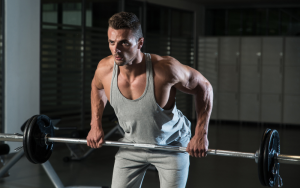
If you want the most out of both movements, do your bench press first and save chest flys for afterward.
Pressing while you're fresh protects your strength gains, while flys layered on at the end still deliver full chest growth, plus a deep stretch and muscle isolation the bench press can't match on its own.
Keep reading for the research and a full breakdown of how to put this into practice.
The Quick Answer — Bench Press First, Flys Second
The order here is simple: bench press when you're fresh, flys when you're not. Research on exercise sequencing backs this up in a specific way.
Total muscle growth barely changes based on order, but strength gains lean heavily toward whichever exercise you do first. That's the whole case for benching before flying.
Bench press is the more demanding movement in almost every sense. It's heavier, more technical, and far more sensitive to fatigue than a fly ever will be.
Put it second and you're asking a tired body to handle your biggest lift, right when your stabilizers, coordination, and grip are already worn down. Put it first, and you protect the lift that matters most for raw strength.
Flys, by contrast, don't need fresh muscles to work. Think of them as volume extension: a way to keep training the chest productively after the compound work is done, not a substitute for it.
A fly will never replicate what a heavy press does for overall strength and mass, but it doesn't need to. Its job is different.
That job includes a few things bench press structurally can't deliver:
- A deep stretch at the bottom of the movement — the bar stops at your chest during a bench press; a fly doesn't have that limit
- Isolation of the pec through horizontal adduction — minimal triceps or shoulder involvement, so the chest works without other muscles cutting the set short
- Coverage of the strength curve bench press neglects — bench dominates the top portion of the range, flys pick up where dumbbell or cable tension actually peaks
Sequenced this way, you get the best of both: pressing strength that keeps climbing, and chest growth that doesn't leave anything on the table.
What the Research Actually Shows About Exercise Order
This isn't just gym folklore. A meta-analysis pooling data across multiple studies found a consistent pattern: strength gains favor whichever exercise comes first in a workout, whether that's a multi-joint lift like the bench press or a single-joint movement like a fly.
Hypertrophy told a different story entirely. Across the same body of research, muscle growth showed no significant difference based on order.
That split is the entire justification for how you should sequence your chest workout: order shapes strength specificity, not the total muscle you build.
A study focused specifically on chest training makes this even more concrete. Untrained men trained twice weekly for 10 weeks, comparing bench press paired with a triceps isolation exercise in different sequences.
Bench press strength gains ended up statistically identical no matter which order the groups trained in. Pec growth, though, told a more useful story: the group that did isolation work before bench press saw roughly half the chest growth of the groups that pressed first.
That difference didn't reach statistical significance, but it's a meaningful trend, and it points the same direction as the broader research.
Why pre-exhaustion doesn't hold up
The theory behind pre-exhaustion sounds reasonable: fatigue the chest with flys first, so the pec, not the triceps, becomes the limiting factor once you start pressing. In practice, this backfires.
EMG research on a comparable pre-exhaustion setup shows why. When lifters fatigued a target muscle with an isolation exercise before moving into a compound lift, two things happened:
- Rep performance in the compound lift dropped by roughly 20%
- Activation of the target muscles during the compound lift was significantly lower, not higher
In other words, pre-exhausting the chest doesn't concentrate more work onto it during the press. It just leaves you weaker and less able to activate the muscle at all.
Longer-term training studies back this up: pre-exhaustion shows no hypertrophy advantage over the standard compound-first order.
The practical takeaway
Order determines which lift gets the strength edge. It does very little to change how much muscle you build overall. That means the smart move is sequencing your workout around whichever lift you care most about improving.
For most lifters chasing both a bigger bench and a bigger chest, that means bench press first, flys after.
Why Flys Add Something Bench Press Can't
Flys aren't a weaker version of the bench press. They're a different tool that covers gaps the press leaves behind.
Lower fatigue cost, higher salvage value
Bench press is unforgiving when you're tired. It demands coordination, stability, and fresh triggering strength from several muscle groups at once.
A fly asks for much less. The movement pattern is simpler, the joints involved are fewer, and the technical margin for error is wider.
That's exactly why it belongs at the end of a workout: it holds up well under accumulated fatigue in a way that a heavy press never will.
Tension over pump
Flys get credited for “the burn,” but that's not actually where their value comes from. Metabolic stress, the sensation of a pump, has been increasingly downgraded as an independent driver of muscle growth.
What flys actually deliver is mechanical tension in the stretched position, specifically at the bottom of the movement. That distinction matters: it means the value of a fly isn't the burn you feel, it's the load your chest handles while lengthened.
Isolating the muscle that matters
The bench press is a bi-articular exercise. That means muscles crossing two joints, like the long head of the triceps, share the workload alongside the pec.
Those assisting muscles fatigue too, and often end the set before the chest itself is fully stimulated.
Flys work differently. The movement is built on horizontal adduction, a mono-articular action that's the primary job of the sternal head of the pec. Triceps involvement drops out almost entirely. That means:
- Less competition from fatiguing assist muscles
- More direct, sustained tension on the chest itself
- The ability to keep challenging the pec even after pressing muscles are already spent
Stretch under load
The bottom of a fly puts the pec at its longest muscle length under real resistance. Training a muscle in this lengthened position is a well-supported, if moderate, driver of hypertrophy.
The bench press can't replicate this, because the bar physically stops once it reaches your chest. A fly has no such ceiling, especially with dumbbells or cables, letting you push the stretch further than a press ever could.
Covering more of the strength curve
Bench press and flys are strongest in opposite parts of the range:
- Bench press dominates the top portion of the movement, where you're pressing the heaviest total load
- Flys dominate the bottom, stretched portion, where dumbbell and cable tension is highest
Used together, they cover far more of the pec's working range than either one alone.
What activation data shows
Direct comparisons between the two movements make the division of labor clear. Barbell bench press produces meaningfully higher overall pec activation and dramatically higher triceps activation than dumbbell flys.
Flys, on the other hand, show notably higher biceps activation. The load difference is stark too: the average bench press weight used was more than double the fly weight at matched effort.
None of this makes flys “better” or “worse” than bench press. It just confirms they're doing different jobs, which is exactly why sequencing one after the other, rather than choosing between them, gets you more complete chest development.
How to Program Flys After Your Bench Press
Knowing the order is right is one thing. Executing it well is another. Here's how to structure the actual workout.
The sequence
- Heavy compound press — bench press first, while you're fully fresh, prioritizing your main strength work
- Optional second press — an incline or machine press variation, if your program calls for additional pressing volume
- Flys as the finisher — done last, once your pressing strength for the day is already banked
This order lets you spend your best energy on the lift that benefits most from being fresh, then use flys to extend the workout without risking your pressing performance.
Sets and reps
Flys respond well to a higher-rep range than heavy pressing. Aim for 2 to 4 sets of 10 to 15 reps. This range suits the movement for two reasons: loadability is naturally limited compared to a press, and higher reps are simply safer once you're working through a deep stretch under fatigue.
Effort level
Flys have a tendency to feel easier than they actually are, largely because the fatigue they generate is lower and less systemic than a heavy press.
That deceptive ease leads to a common mistake: undertraining them. Push each set to within roughly 1 to 3 reps of failure. That's close enough to create a real growth stimulus, while still leaving enough control to manage the stretch safely.
Rest periods
Heavy compound lifts demand long recovery between sets, often 2 to 3 minutes or more. Flys don't. Since they're an isolation movement with lower systemic fatigue, 60 to 120 seconds of rest is typically enough between sets.
Load selection
This is where most lifters get it wrong. By the time you reach flys, your chest and shoulders are already fatigued from pressing, and the stretched bottom position is exactly where fly-related injuries tend to happen.
Choose a lighter weight than you think you need. Two things should guide your load selection more than the number on the dumbbell:
- Full control through the eccentric (lowering) portion of the rep
- A controlled, deliberate turnaround at the bottom of the stretch, rather than bouncing out of it
Chasing heavier loads on a fatigued, stretched muscle isn't where the growth stimulus comes from anyway. Control at the bottom of the movement is the priority, not the weight on the bar.
Choosing the Right Fly Variation for Your Goals
Not all flys deliver the same stimulus. The equipment you choose changes the tension curve, the joint demand, and even which part of the chest gets emphasized.
Cable fly — the default choice
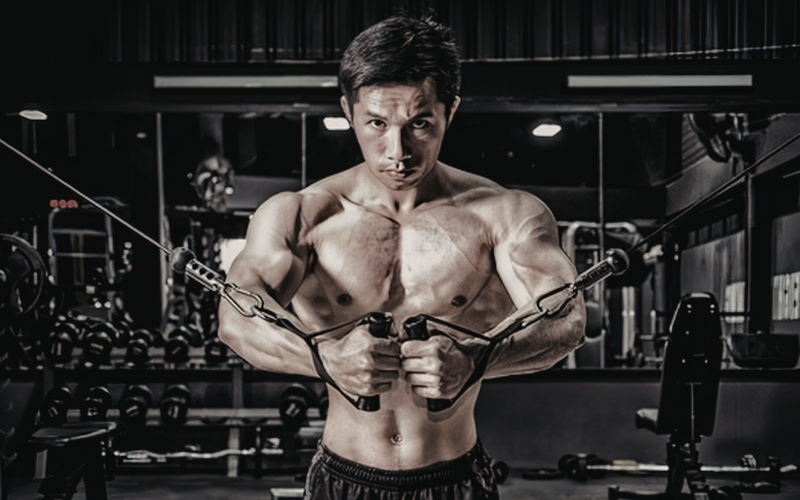
If you only pick one variation, make it this one. Cable flys keep tension on the chest through the entire range of motion, unlike free weights, which lose tension at certain points.
That constant load, combined with a joint-friendly setup, makes cable flys easy to push close to failure without excessive strain. Adjusting pulley height also lets you shift emphasis:
- Low-to-high pulley — biases the upper chest
- High-to-low pulley — biases the lower chest
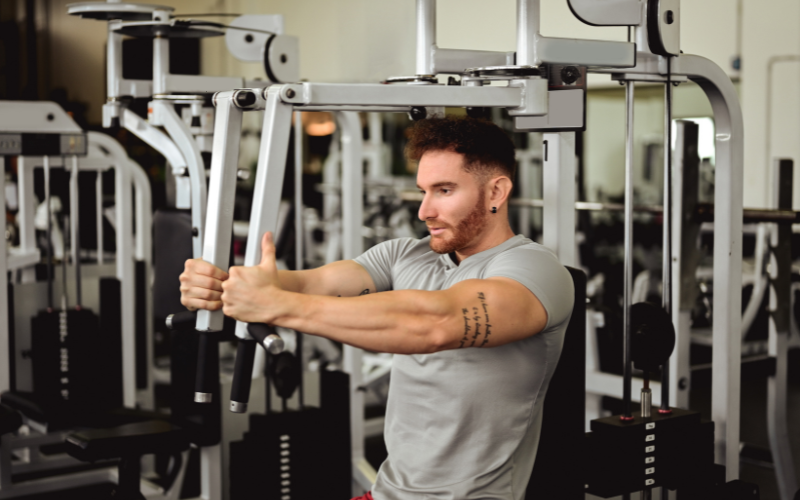
Pec deck or machine fly — the safest option
When fatigue is high or you're newer to training, machine flys are the most forgiving choice. The fixed path of motion removes the stabilization demands that free weights require, so you can train hard and close to failure with far less risk. This is also a smart substitution any time joint discomfort makes dumbbells or cables feel unstable.
Dumbbell fly — maximum stretch, maximum caution
Dumbbell flys deliver the deepest, most direct stretch stimulus of any fly variation, since the resistance peaks precisely at the bottom of the range.
That's also what makes them the riskiest option. The stretched position places real demand on the shoulder, and there's no way to safely bail out of a rep if you lose control at the bottom.
Use lighter loads, control the depth of the stretch deliberately, and consider a floor or incline variation to reduce shoulder strain.
Incline fly
Set at a 30 to 45 degree angle, this variation shifts emphasis toward the upper, clavicular portion of the chest. Worth prioritizing if upper chest development has lagged behind the rest.
Decline fly
The inverse setup, targeting the lower, sternal fibers of the chest instead.
A simple decision guide
Match your fly variation to three factors:
- Fatigue level — high fatigue or lower experience favors machine or cable work; fresher, more experienced lifters can handle dumbbells
- Joint health — shoulder sensitivity or instability points toward cable or machine variations over free weights
- Chest priority — upper chest lagging calls for an incline angle; lower chest calls for decline; overall development is well served by a standard flat cable fly
There's no single “best” fly. The right choice depends on what your body can handle that day and which part of your chest needs the most attention.
When to Break the Rule — Exceptions and Injury Considerations
Bench-then-fly is the right default, not an unbreakable law. A few situations call for a different approach.
When flys aren't worth the slot
If your workout only has room for two or three chest exercises, flys might not deserve one of them. In that scenario, an incline press often does more for your chest than a flat fly would.
Flys are a volume-extension tool: something you add once your pressing work is covered, not a mandatory piece of every chest session.
If pressing already fills your recoverable training volume, adding flys on top just adds fatigue without adding growth.
Shoulder and joint precautions
The deep stretch that makes flys valuable is also what makes them risky. A heavy dumbbell fly loads the anterior shoulder capsule and the pec tendon while the joint is in its most vulnerable position, and unlike a bench press, there's no safe way to bail out of a rep if you lose control at the bottom.
Lifters with any of the following should adjust accordingly:
- Shoulder instability — favor cable or machine flys over dumbbells, and limit how deep you let the stretch go
- AC-joint issues — the same substitution applies; machines offer a more controlled path of motion
- History of pec strain — keep loads modest and prioritize constant-tension variations over free weights
The pre-exhaustion exception
Earlier sections made the case against training flys before bench press, and that still holds as general advice. But advanced lifters chasing a specifically lagging chest sometimes use pre-exhaustion or supersets on purpose, accepting weaker pressing performance in exchange for a sharper mind-muscle focus on the pec.
This is a legitimate specialization tactic for experienced lifters targeting a specific weakness. It's not a strategy for someone just trying to build overall size and strength.
Where beginners fit in
If you're new to training, don't overthink any of this. Exercise order barely moves the needle at this stage.
Consistency and progressive overload, showing up regularly and adding weight or reps over time, will do far more for your chest than optimizing the sequence of your exercises ever will.
Conclusion
Bench press first, flys second: that's the order backed by both strength and hypertrophy research.
Pressing while fresh protects your strength gains, while flys layered on afterward round out your chest development with a stretch and isolation the bench press can't provide.
Get this sequence right, and you're training smarter, not just harder.