The five best boxing sparring tips for beginners are: start slow at 50-70% intensity to build technique instead of survival habits, master nose breathing and stay relaxed to avoid early exhaustion, keep your hands up at all times and focus on defense first, prioritize constant footwork over standing flat-footed, and choose sparring partners carefully who match your skill level and share a learning mindset.
Keep reading for a detailed breakdown of how to implement each tip, why they matter, and the specific mistakes they'll help you avoid in the ring.
Start Slow and Control Your Intensity
The biggest mistake you can make in your first sparring sessions is treating them like a real fight.
When you go too hard, your brain shifts into survival mode—you stop learning technique and start just trying not to get hit.
Keep your intensity between 50-70% so you can actually focus on what you're doing instead of panicking.
Start with modified formats before jumping into full sparring:
- Jab-only rounds let you build fundamental skills without overwhelming yourself
- Body-boxing (shoulders to waist only) teaches offense and defense without head trauma
- Slow-motion sparring gives you time to process incoming punches and choose deliberate responses
Structure your early sessions around 2-4 rounds of two minutes each, not the full three-minute rounds you'll eventually work up to.
Before you start, talk with your partner about the intensity you both want.
If things heat up mid-round, just say “lighter, please”—good partners will respect it.
Focus on working specific techniques rather than trying to win.
Going too hard too soon creates survival habits instead of technical skills, leads to injuries, burns you out mentally, and often makes people quit entirely.
Light sparring builds the neural pathways for proper form without the trauma that comes from getting repeatedly cracked in the head.
Master Your Breathing and Stay Relaxed
Tension kills your endurance faster than anything else.
Most beginners hold their breath or take shallow chest breaths during sparring, which triggers rapid fatigue and panic responses.
You need to switch to diaphragmatic breathing—inhale through your nose and expand your belly, not your chest.
During sparring, follow this pattern:
- Breathe in slowly through your nose while you're moving and preparing
- Exhale sharply through your mouth with every punch you throw
Between rounds, use box breathing to bring your heart rate down: inhale for 4 counts, hold for 4, exhale for 4, hold for 4, then repeat until you feel controlled again.
Never hold your breath when you're throwing or receiving punches—it's a natural reaction under stress, but it sabotages everything.
The physical benefits are significant.
Nose breathing delivers oxygen more efficiently to your lungs and triggers your parasympathetic nervous system, which reduces stress and keeps you mentally clear under pressure.
Those sharp exhalations with each punch stabilize your core and prevent carbon dioxide buildup that causes premature exhaustion.
Stay loose throughout—keep your weight on the balls of your feet with relaxed shoulders and jaw.
Beginners who master breathing can maintain energy for significantly longer rounds than those who don't.
Keep Your Guard Up and Build Defensive Habits
The most dangerous mistake beginners make is dropping their hands after throwing punches.
When you're tired or focused on offense, your hands drift down to waist level, leaving your head completely exposed to counters.
After every single punch, snap your hand back to face level—no exceptions.
Your defensive posture needs attention to three things.
Keep your chin tucked but your head up enough to actually see incoming punches.
Look at your opponent's chest or shoulders, not their eyes or hands—this lets you read their entire body movement and anticipate what's coming.
Practice catching and parrying punches while keeping both hands high.
Dedicate entire rounds to defense only.
Block, slip, parry, and move without throwing anything back.
These pure defensive rounds teach you to read patterns, time movements, and spot counter-punching opportunities.
Use 16-ounce gloves minimum for sparring—they give better protection and force you into proper defensive form.
Defense matters more than offense when you're starting out.
The skill of not getting hit separates good boxers from those who just trade punches.
You can have the hardest jab in the gym, but if you're eating three shots for every one you land, you're not boxing well.
Build these habits immediately because bad patterns become extremely hard to break later.
Prioritize Footwork and Constant Movement
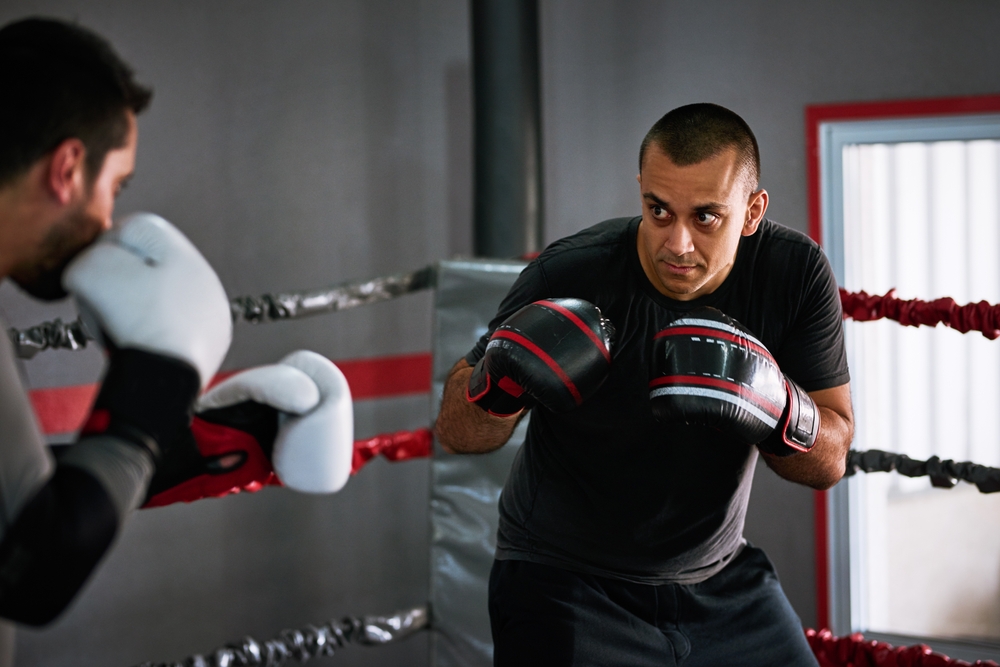
Beginners typically stand flat-footed or move straight backward when pressured, which makes them easy targets.
Good footwork isn't just about looking skilled—it's what enables both your offense and defense to actually work.
Get the mechanics right first:
Stay on the balls of your feet at all times.
Your heels should barely touch the canvas.
Keep your feet shoulder-width apart to preserve balance.
When you move, take small coordinated steps—if your lead foot moves 2 inches, your rear foot also moves 2 inches to maintain your stance.
Never move straight backward. Step at angles, pivot laterally, or circle out after throwing punches.
Your entire body needs to move together, not upper body separated from lower body.
Practice the step-and-jab drill: push off your rear foot, step forward with your lead foot, throw the jab, then bring your rear foot up to reset your stance.
Stay in motion with subtle weight shifts even when you're not attacking.
Being a stationary target is asking to get hit.
Movement keeps you in optimal range to attack while staying out of your opponent's range, prevents you from getting cornered, makes you harder to hit, and sets up angles for your own punches.
Shadow box outside of sparring—practice lateral shuffles, forward-backward movements, and pivots until they become automatic.
Choose Your Sparring Partners Carefully and Set Yourself Up for Success
Your sparring partner dramatically affects both your learning and your safety.
Bad matches lead to injuries, discouragement, and poor habits that stick with you.
Start with your coach or very experienced boxers who have excellent control.
They can adjust to your level and guide you through the process.
When you move to peer partners, choose someone at your skill level or slightly above—not drastically more advanced.
Match weight classes when possible for realistic exchanges.
Look for communicative partners who discuss goals before you start: “Let's work on jabs and footwork this round.”
Avoid partners who can't control their power or treat sparring like a real fight.
A quality sign is when someone checks in: “Was my power okay?”
Respect your partner's pace—if they're going 10%, don't go 100%.
Good partners share a learning mindset where both people improve.
Experienced boxers often go defense-only or jab-only with beginners to give you space to work.
Red flag: never continue with someone who repeatedly ignores your requests to reduce intensity.
Equipment you need every session:
- Mouthguard (protects teeth, reduces concussion risk)
- 16-ounce gloves minimum
- Headgear, especially when starting
- Groin protection
- Boxing shoes with good traction
Come to sparring fresh, not exhausted from earlier training.
Fatigue increases injury risk and prevents learning.
Spar once or twice per week maximum as a beginner—your body and nervous system need recovery time.
After each session, note what worked and what didn't, discuss with your coach, and identify one specific skill to improve next time.
Conclusion
Sparring is a learning tool, not a competition—your goal is skill development, not proving yourself.
These five fundamentals form the foundation for long-term boxing success, and progress happens gradually through patient, consistent application.
Focus on implementing one tip at a time, accept that mistakes are part of the process, and you'll find that sparring becomes both enjoyable and transformative for your abilities.